
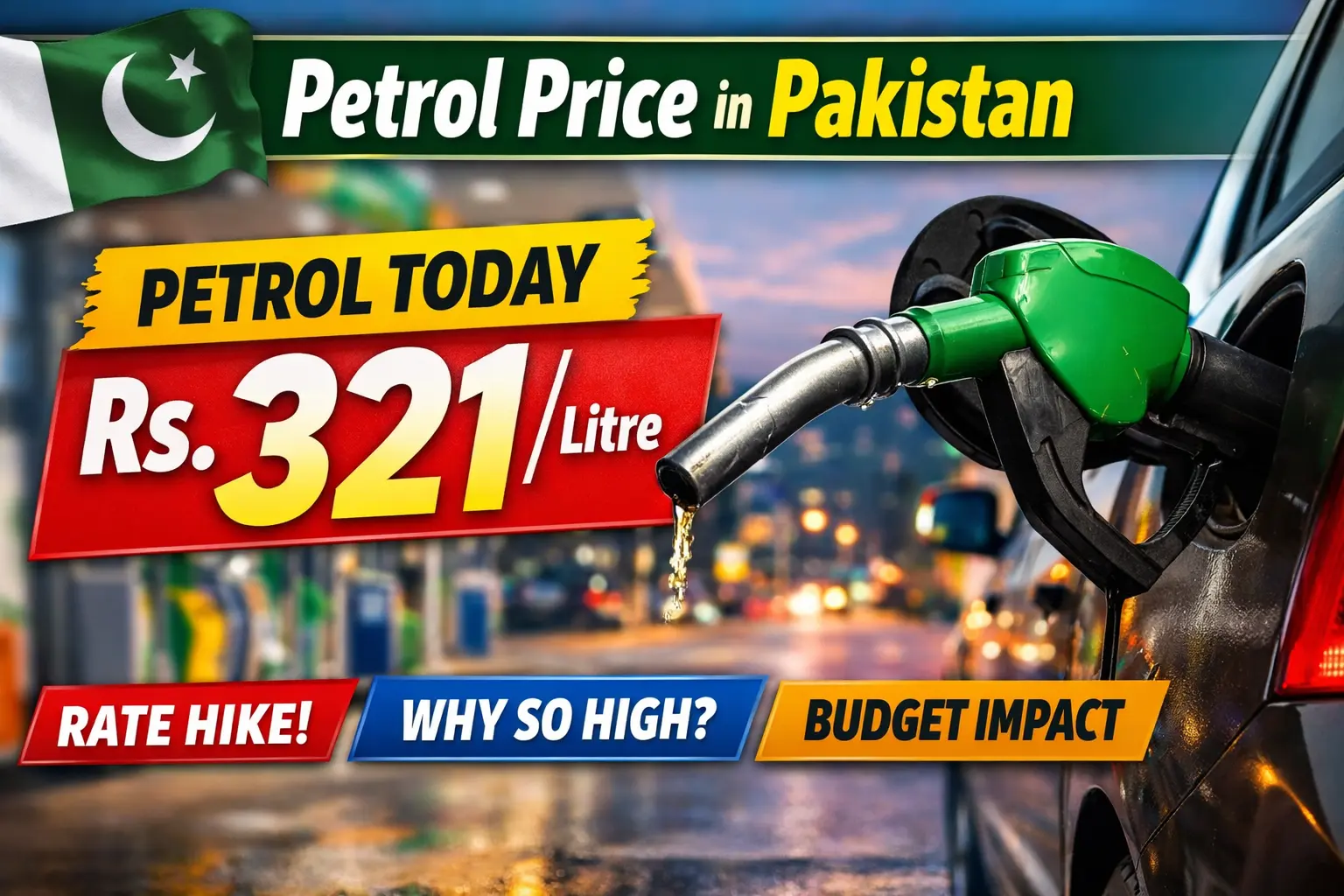
Petrol Price in Pakistan Today: Latest Petrol Rate Update (2026)
Fuel prices are a major part of everyday life in Pakistan. Whether you commute daily, run a business, or manage a household, the petrol price in Pakistan today directly affects your expenses. Recent announcements by the government have brought significant changes to fuel rates. This article explains the latest petrol rates, the reasons behind the price changes, and how it impacts your monthly budget in simple terms.
Latest Petrol Price in Pakistan Today (2026)
The federal government, following the recommendations of the Oil and Gas Regulatory Authority (OGRA), has increased petrol prices across Pakistan. This change is effective in major cities including Karachi, Lahore, Islamabad, and Peshawar.
Note: The new petrol rates came into effect on March 7, 2026, and will remain until the next fortnightly review.
Here’s the current petrol price in Pakistan today:
- Petrol: Rs. 321.17 per litre
- Diesel: Rs. 283.45 per litre
- Kerosene: Rs. 234.12 per litre
These rates may vary slightly in remote areas due to transportation costs.
Why Petrol Prices Increased in Pakistan?
Several factors contribute to rising petrol prices. Understanding these will help you see why fuel costs have gone up.
1. Rising Global Crude Oil Prices
Pakistan imports more than 70% of its oil needs. Therefore, global crude oil price changes have a direct effect on domestic fuel prices. Recently, international Brent crude oil prices increased due to production cuts and high global demand, forcing local fuel prices to rise.
2. Exchange Rate Volatility
The Pakistani Rupee (PKR) often fluctuates against the US Dollar (USD). Since oil is imported in dollars, a weaker rupee increases the cost of petrol in Pakistan.
3. Petroleum Development Levy (PDL)
The government imposes a Petroleum Development Levy (PDL) to generate revenue and maintain fiscal balance. Currently, the PDL is at its maximum limit, which adds extra cost to every litre sold at petrol pumps.
4. Geopolitical Tensions
Conflicts in the Middle East have disrupted oil supply chains and increased shipping costs. This “risk premium” also contributes to higher petrol prices in Pakistan.
How the Petrol Price Hike Affects Your Pocket
When petrol prices increase, it has a ripple effect on the overall economy. Here’s how it impacts different sectors:
1. Logistics and Food Prices
Higher petrol and diesel rates increase transportation costs. This affects the delivery of vegetables, fruits, and grains from farms to markets, causing “kitchen inflation.”
2. Public Transport
Bus fares, rickshaw charges, and ride-hailing app fares are likely to increase by 10-15%. Commuters will feel this impact directly on their daily budgets.
3. Manufacturing and Industry
Factories that rely on diesel generators for power will face higher production costs. This increase may be passed on to consumers through higher prices for goods.
When Will Petrol Prices Change Again?
In Pakistan, fuel prices are reviewed every 15 days. The next official notification is expected around March 15–16, 2026, and changes will take effect immediately after.
Pro-Tip: Track Brent Crude prices and PKR/USD exchange rates in the second week of each month. These indicators often predict whether petrol prices will rise or fall.
Frequently Asked Questions (FAQs)
1. Why is petrol more expensive in Pakistan than in neighboring countries?
Petrol prices differ because of tax policies, the PDL, and reliance on imported oil. Countries with their own oil reserves usually have lower prices.
2. How can I check the official petrol price in Pakistan today?
Official prices are released via the Finance Ministry and OGRA notifications. Major news outlets also broadcast updates immediately.
3. Does the government earn profit from petrol?
The government does not profit like a business. Revenue from the PDL and customs duties is used for national projects, infrastructure, and debt repayment.
4. Will petrol prices decrease in 2026?
Prices can only decrease if global crude oil prices drop significantly or if the PKR strengthens against the USD. Analysts predict continued volatility for the remainder of 2026.
Tips to Manage Fuel Costs
While fuel prices are out of individual control, you can reduce their impact with these tips:
- Carpooling: Share rides with friends or colleagues to reduce petrol consumption.
- Public Transport: Use buses or metro systems whenever possible.
- Fuel-Efficient Vehicles: Consider using motorcycles or hybrid cars.
- Budget Planning: Allocate extra funds for transport and logistics in your monthly expenses.
- Monitor Rates: Stay updated on petrol prices to plan fuel purchases strategically.
Final Thoughts
The current petrol price in Pakistan today, Rs. 321.17 per litre, is a reminder of the economic challenges facing the country. Consumers, businesses, and households need to adapt to these changes. Understanding the reasons behind the price hike and taking proactive steps can help manage your expenses efficiently.
Keeping an eye on international oil prices and exchange rate trends will allow you to make better decisions regarding travel, transport, and household budgeting.
Stay informed, plan ahead, and manage your fuel costs wisely!
Related Posts: