
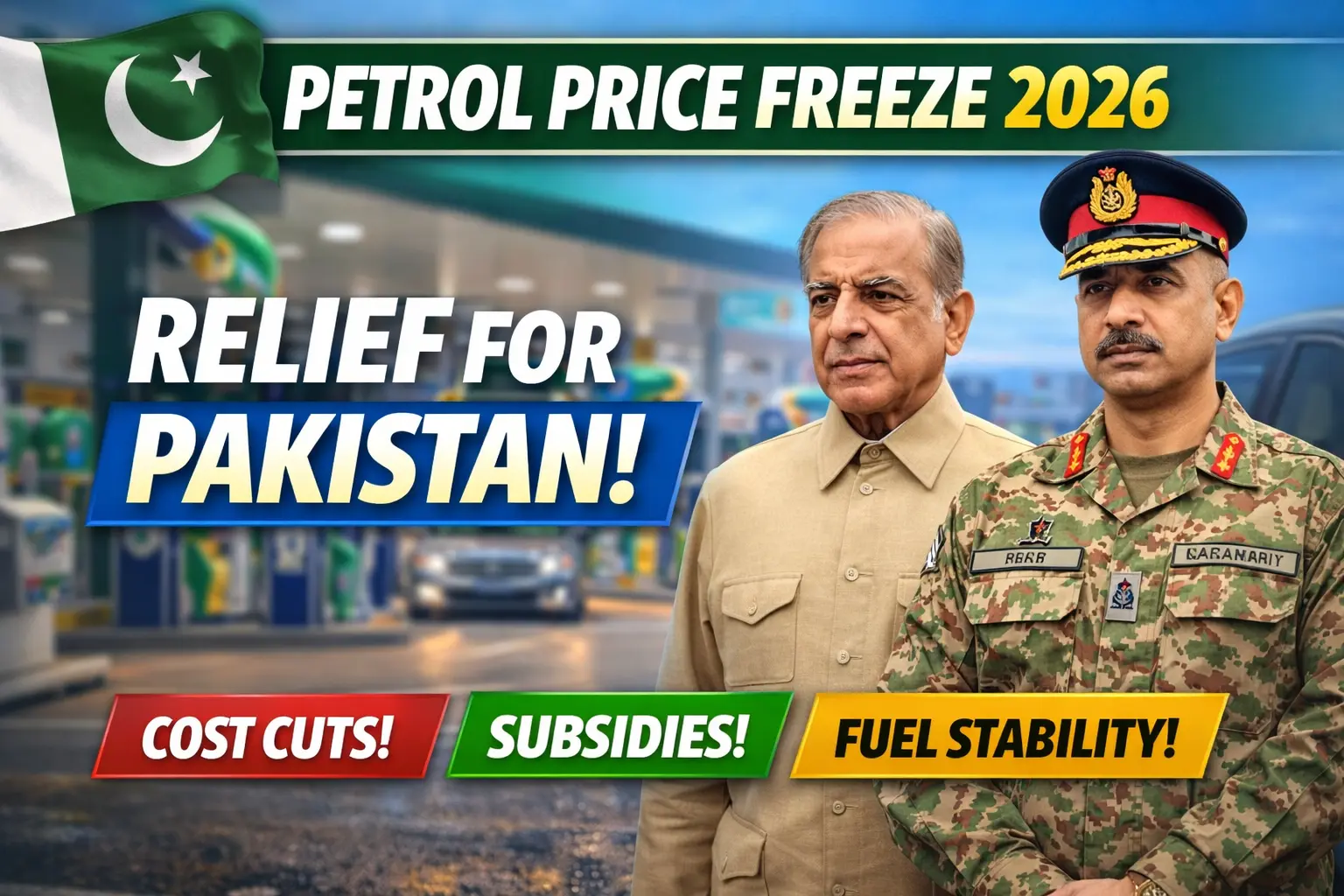
Petrol Price Freeze 2026: PM Shehbaz & COAS Munir Plan Relief for Pakistan
Petrol prices in Pakistan have become a hot topic as global oil prices continue to rise. To protect citizens from sudden increases, Prime Minister Shehbaz Sharif and Chief of Army Staff General Asim Munir are reviewing a plan to freeze petrol prices temporarily. This move aims to reduce inflation, control transport costs, and provide economic relief in 2026.
Why Petrol Prices Are Rising Globally
International petrol and diesel prices are influenced by multiple factors, which directly affect Pakistan due to its dependency on imported oil.
Key Global Factors:
- Geopolitical tensions disrupting oil supply routes.
- Higher global demand following economic recovery in major economies.
- Shipping disruptions in important trade lanes.
- Increased production costs for oil companies.
- Currency fluctuations in oil-importing countries.
Since Pakistan imports most of its petroleum products, international price changes directly influence local petrol rates.
Current Petrol Prices in Pakistan
Petrol and diesel prices are already at historic highs. Without government intervention, these prices could increase further, impacting daily life and business operations.
Estimated Fuel Prices (2026):
| Fuel Type | Current Price (Approx.) | Possible Increase |
|---|---|---|
| Petrol | Rs. 322 per litre | Rs. 41 |
| High-Speed Diesel (HSD) | Rs. 337 per litre | Rs. 56 |
| Kerosene Oil | — | Rs. 7 |
| Light Diesel Oil | — | Rs. 53 |
These increases could significantly raise transportation costs and living expenses if left unchecked.
PM Shehbaz & COAS Munir Meeting
A recent consultative meeting gathered top leadership to discuss rising fuel costs. PM Shehbaz Sharif and General Asim Munir evaluated strategies to stabilize petrol prices.
Key Points Discussed:
- Using emergency reserves worth Rs. 389 billion.
- Implementing a temporary price stabilization policy.
- Careful management of foreign exchange reserves.
- Ensuring fuel availability across the country.
The goal is to absorb part of the global oil price increase instead of passing the full burden to consumers.
How the Government Could Freeze Petrol Prices
Freezing petrol prices requires financial planning and strategic management. Authorities are exploring several options:
Possible Strategies:
- Emergency Financial Reserves: Using Rs. 389 billion to stabilize prices temporarily.
- Subsidy Adjustments: Temporarily adjusting fuel subsidies to reduce consumer costs.
- Strategic Oil Imports: Prioritizing cheaper crude from friendly countries.
- Controlled Pricing Policy: Spreading price adjustments over several months to minimize impact.
Role of Saudi Arabia in Pakistan’s Oil Supply
Saudi Arabia plays a key role by supplying crude oil under deferred payment agreements, which helps Pakistan manage foreign exchange reserves.
Benefits of Saudi Oil Support:
- Maintains refinery operations efficiently.
- Supports local diesel production.
- Reduces immediate pressure on foreign currency reserves.
- Ensures consistent oil supply across Pakistan.
This cooperation is crucial for stabilizing fuel supply and preventing sudden price shocks.
Diesel Supply and Import Challenges
High-Speed Diesel (HSD) is essential for transportation and agriculture. However, diesel imports face challenges:
- Limited shipping routes.
- Longer transportation times from alternative suppliers.
- Rising global shipping costs.
Authorities encourage local refineries to maximize diesel production to meet domestic demand.
Petroleum Reserves in Pakistan
Pakistan currently has fuel reserves that can last approximately three weeks.
Fuel Stock Overview:
| Resource | Estimated Availability |
|---|---|
| Petrol Reserves | Around 3 weeks |
| Diesel Reserves | Around 3 weeks |
| Import Shipments | Being monitored |
Proper reserve management allows the government time to implement pricing policies and import strategies without causing shortages.
Impact of Petrol Price Increases on Pakistan’s Economy
Fuel prices affect almost all sectors of the economy. Even a small rise can increase transportation costs, pushing up the prices of goods and services.
Affected Sectors:
- Transportation Industry – buses, trucks, ride-hailing.
- Agriculture Sector – diesel for tractors and irrigation.
- Manufacturing & Logistics – production and delivery costs.
- Food Supply Chains – higher prices for vegetables, grains, and fruits.
- Electricity Generation – diesel-powered generators.
Possible Energy Conservation Measures
Alongside price stabilization, authorities are exploring ways to reduce energy consumption:
- Industrial Gas Supply Adjustments: Limiting supply during peak periods.
- Energy Demand Management: Controlling electricity usage during high-demand seasons.
- Fuel Rationing Plans: Limited fuel distribution in extreme situations.
These steps are designed to protect national energy resources and maintain stability.
Next Petrol Price Review Date
Pakistan reviews fuel prices regularly, usually every 15 days. The next review is scheduled for March 15, 2026. However, an earlier announcement may occur if global oil markets change rapidly.
What a Petrol Price Freeze Means for Citizens
Freezing petrol prices could provide temporary relief for millions of Pakistanis.
Potential Benefits:
- Stable transportation costs for commuters and businesses.
- Lower inflation pressure on everyday goods.
- Reduced burden on middle-income households.
- Improved business stability and planning.
Experts note that price freezes are temporary; governments eventually adjust prices based on global market conditions.
Mobile-Friendly Content & SEO Tips
For better readability and engagement:
- Keep paragraphs under 3 lines.
- Use clear headings and subheadings.
- Include bullet points for easy scanning.
- Add tables for data comparison.
- Optimize images with descriptive alt text for SEO.
These strategies improve user experience on smartphones and boost SEO performance.
FAQs
1. Why is petrol becoming expensive in Pakistan?
Global crude oil price increases and Pakistan’s dependence on imports raise local petrol prices.
2. Will petrol prices increase in Pakistan in 2026?
Authorities are reviewing the situation. Temporary freezes may prevent immediate increases.
3. When is the next petrol price announcement?
The next review is expected around March 15, 2026, but an earlier update is possible.
4. How does petrol price affect inflation?
Fuel price increases raise transportation costs, leading to higher prices for goods and services.
5. What is High-Speed Diesel (HSD) used for in Pakistan?
HSD is mainly used in trucks, buses, agriculture machinery, and heavy transport vehicles.
Conclusion
The potential petrol price freeze in Pakistan represents a major relief effort for citizens and businesses. By using emergency funds, subsidies, and strategic oil imports, PM Shehbaz Sharif and COAS Asim Munir aim to shield Pakistanis from sudden price shocks. While global oil prices continue to rise, careful planning and resource management can help maintain stability in the country’s fuel supply.
Consumers should stay informed about official announcements and global oil trends to plan their budgets accordingly.