Ehsaas Program 2026 Latest Update: Full Guide to Eligibility, Registration and Payment Details
The Ehsaas Program 2026 continues to be one of the most discussed financial support systems in Pakistan, especially for low-income households trying to manage rising expenses. Many people search for information about a “Rs 25,000 payment,” but the structure is more layered than a single fixed amount. Instead, the total benefit depends on multiple components such as regular support installments, past dues, and education-related assistance.
To understand it properly, it helps to look at it as a combined support system rather than a single payment.
Understanding the Core Support Amount
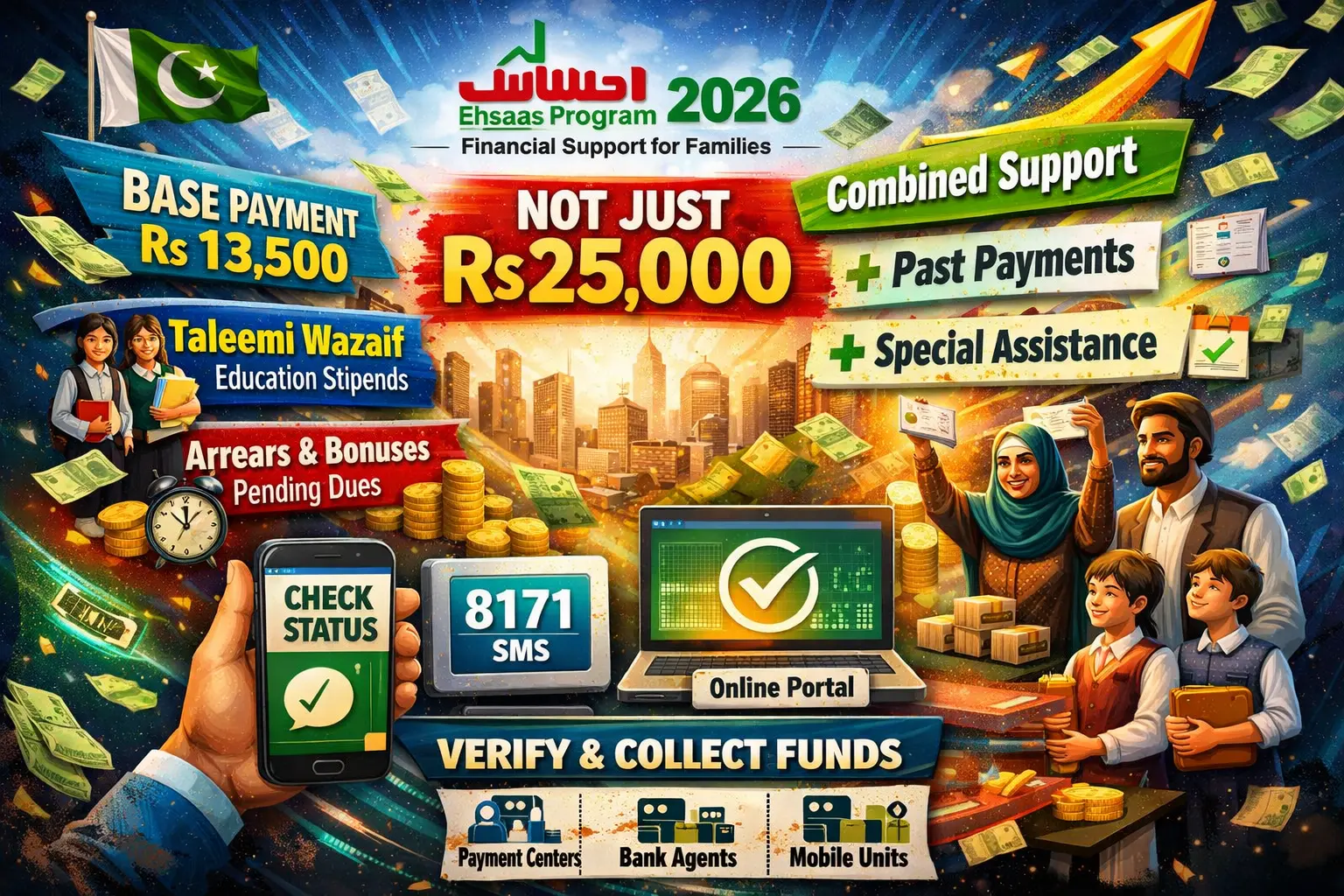
At the center of the program is a regular financial installment that eligible families receive every quarter. From 2026 onward, this base support has been adjusted to Rs 13,500 per cycle. This amount is the standard payout that approved households can expect after verification.
This change reflects the government’s attempt to adjust assistance according to inflation and rising household costs. However, not every beneficiary receives only this amount, which is where confusion about higher totals begins.
Why People Mention Rs 25,000
The figure of Rs 25,000 is not an official fixed payment. Instead, it usually represents a combined total of different payments received at one time. These may include:
- Pending or delayed installments from previous cycles
- Education support for children under Taleemi Wazaif
- Additional adjustments or special relief payments
When these are processed together, the total amount credited to a household can sometimes reach around Rs 25,000 or even slightly more. This is why many beneficiaries report higher lump-sum payments during certain cycles.
However, it is important to understand that this is not guaranteed for everyone and depends entirely on individual eligibility and payment history.
Additional Support Components
The program is not limited to basic cash assistance. It also includes other support mechanisms that increase the total financial benefit for families.
1. Education Assistance for Children
Families with school-going children may receive additional stipends based on attendance and education level. These payments are designed to encourage school enrollment and reduce dropout rates.
The amount varies depending on grade level and gender, with higher education levels receiving relatively larger support. Regular attendance is also required, typically around 70 percent or more, to continue receiving this benefit.
2. Pending Payments or Arrears
In some cases, beneficiaries do not receive their previous installments on time due to verification delays or technical issues. When these are cleared, they are added to the next payment cycle, increasing the total amount received at once.
3. Special Incentives
Occasionally, additional incentives are provided for specific groups, such as women completing certain education levels or households newly verified after surveys. These bonuses are not regular but may contribute to higher payment totals in certain cases.
Eligibility Requirements
Not every household qualifies for the program. Eligibility is determined through a structured verification process that ensures support reaches the most deserving families.
Key requirements include:
- The applicant must be a female head of household
- A valid national identity card is required
- Household data must be verified through the national socio-economic survey system
- Income level must fall below the defined poverty threshold
- Biometric verification must match official records
- Children’s school attendance is required for education stipends
If a household was previously marked ineligible, they may need to update their information through a dynamic survey process to be reconsidered.
How to Check Your Eligibility and Payment Status
The system provides multiple ways for individuals to confirm their status. These methods are designed to be simple and accessible.
SMS Method
One of the easiest ways is by sending your CNIC number to the official 8171 service. After verification, you receive a message indicating whether you are eligible and whether a payment has been issued.
Online Portal
An official web portal is also available where users can enter their CNIC and view their eligibility status along with payment updates. This method is useful for those with internet access and allows faster tracking.
Assistance Centers and Agents
For those without mobile or internet access, local support centers and authorized agents can check records using biometric verification. This ensures that even remote households can access their information.
Where Payments Are Collected
Once a payment is approved, beneficiaries can collect funds through several authorized channels.
- Designated payment camps set up by authorities
- Partner banking agents providing biometric cash withdrawal
- Mobile distribution units in remote regions
- Digital transfer systems being gradually introduced for direct account payments
The shift toward digital payment methods is aimed at reducing delays and improving transparency.
Common Problems Faced by Beneficiaries
Although the system is improving, users sometimes face issues such as:
- No response after sending CNIC via SMS
- Biometric mismatches during verification
- Unauthorized deductions by agents
- Delays in payment processing
In such cases, users are advised to revisit official centers or report issues through the helpline to ensure corrections are made.
Important Advice for Applicants
Many people rely on unofficial sources, which can lead to misinformation. It is always safer to verify information through official channels only. The program is regularly updated, and eligibility rules or payment structures may change over time.
Keeping your CNIC updated, ensuring accurate household records, and maintaining school attendance for children can help avoid delays or disqualification.
Final Overview
The Ehsaas Program in 2026 is not simply a fixed Rs 25,000 payment scheme. Instead, it is a layered financial support system where the base installment of Rs 13,500 can increase depending on additional factors like education stipends and pending dues.
Understanding how each component works helps beneficiaries avoid confusion and ensures they receive the correct amount. The most reliable way to stay updated is through official SMS services and the verification portal, which continue to be the primary tools for checking eligibility and payments.
As digital systems expand, the process is expected to become more transparent and faster, reducing delays and making financial support more accessible to deserving families across Pakistan.