Ehsaas 25000 Payment Reality 2026 – Who Gets It and How to Check Status
The Ehsaas Program remains one of the most important financial relief initiatives in Pakistan, especially for families struggling with rising living costs. In 2026, many people are searching for information about a “Rs 25,000 payment,” often assuming it is a fixed amount given to all beneficiaries. However, the reality is slightly different and requires a clear understanding of how the system works.
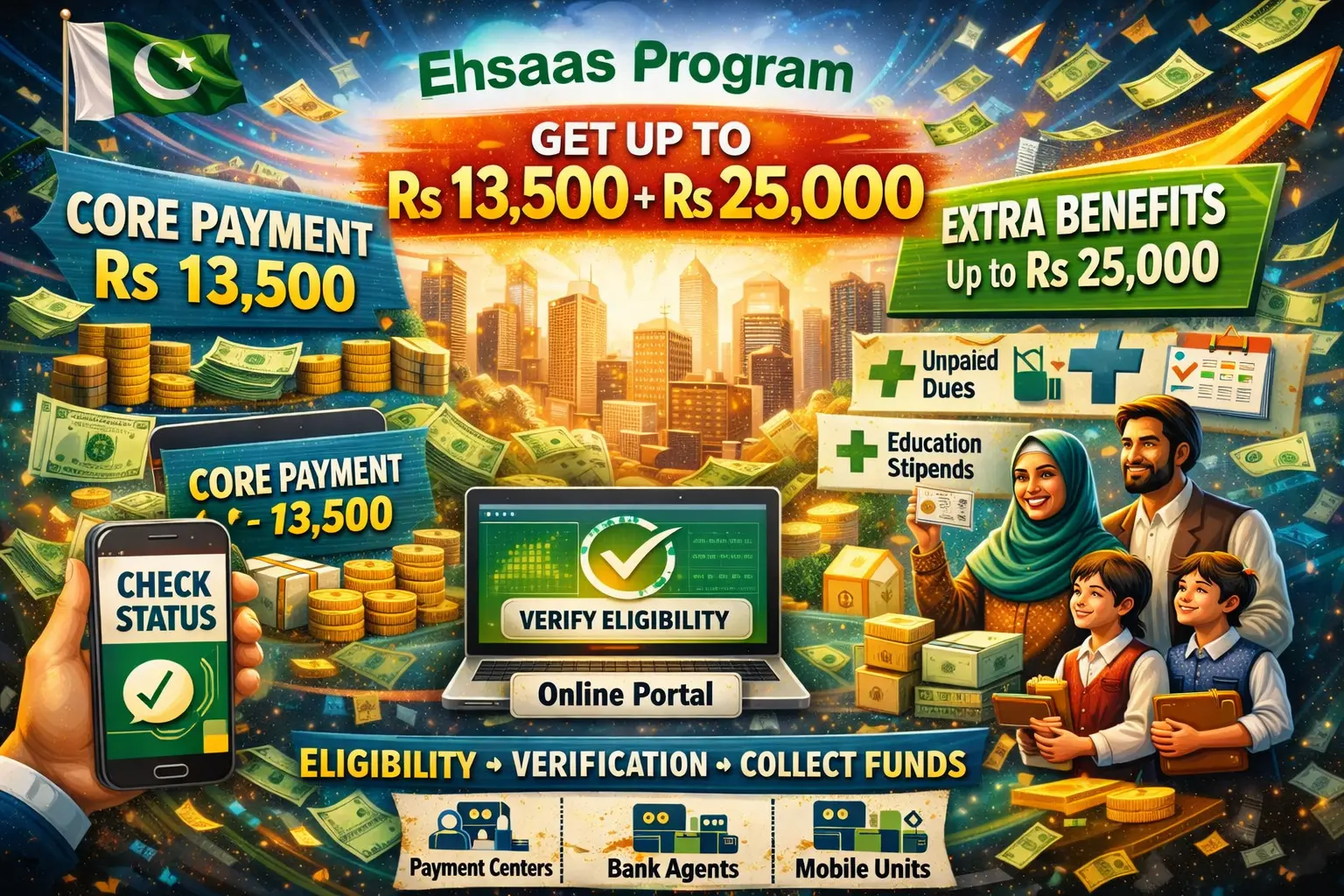
Rather than being a single payment scheme, the program functions as a combination of multiple financial supports. These include a regular quarterly installment, educational stipends for children, and any pending payments from previous cycles. When these elements come together, the total amount received can sometimes reach close to Rs 25,000.
Core Payment Structure in 2026
At the center of the program is a standard financial assistance amount provided to eligible households. As of 2026, this base payment has been set at Rs 13,500 per quarter. This is the confirmed amount that beneficiaries can expect once their eligibility is verified and approved.
This increase reflects adjustments made to address inflation and the increasing cost of living. While this is the official figure, many recipients report receiving higher amounts, which leads to confusion about the so-called Rs 25,000 payment.
Why Some People Receive Around Rs 25,000
The widely discussed Rs 25,000 is not a fixed or guaranteed payout. Instead, it is usually the result of combining different types of payments into one disbursement.
For example, if a beneficiary has missed previous installments due to verification delays or technical issues, those unpaid amounts may be released together in the next cycle. Similarly, families with children enrolled in school may receive additional financial support through educational stipends.
When these extra components are added to the base amount of Rs 13,500, the total can increase significantly—sometimes reaching or exceeding Rs 25,000. However, this depends entirely on individual circumstances and is not applicable to every household.
Additional Financial Benefits
The program is designed to provide more than just basic cash assistance. It includes several supplementary benefits aimed at improving education and overall living conditions for low-income families.
Educational Stipends
Families with children attending school can qualify for additional payments under the Taleemi Wazaif initiative. These stipends are meant to encourage school enrollment and ensure consistent attendance.
The amount varies depending on the child’s education level and gender. Typically, payments range from Rs 1,500 to Rs 4,000. To continue receiving this support, children must maintain a minimum attendance rate, usually around 70 percent.
Pending Installments
In some cases, payments are delayed due to incomplete verification or system-related issues. When these problems are resolved, the missed installments are added to future payments. This can result in a larger amount being received at once.
Special Incentives
Occasionally, the program offers additional bonuses for specific groups. For example, girls completing higher levels of education may receive a one-time incentive. These payments are not regular but can contribute to a higher total amount in certain cases.
Eligibility Criteria
Not everyone qualifies for the Ehsaas Program. The selection process is based on a detailed evaluation system designed to ensure that financial aid reaches those who need it the most.
To be eligible, applicants must meet several requirements:
- The application must be made under the name of a female head of the household
- A valid CNIC is mandatory
- Household information must be registered and verified through the national socio-economic survey
- Income level should fall below the defined poverty threshold
- Biometric verification must match official records
- For educational stipends, children must meet attendance requirements
If someone has been declared ineligible in the past, they can update their information through a dynamic survey. This process allows households to correct their data and potentially qualify again.
How to Check Eligibility and Payment Status
The government has made it easier for people to verify their status through simple and accessible methods.
SMS Service (8171)
One of the most commonly used methods is sending your CNIC number to 8171. After sending the message, you will receive a reply confirming whether you are eligible and if your payment has been processed.
Online Portal
An official web portal is also available where users can check their status by entering their CNIC number along with a captcha code. This method provides quick and detailed information for those with internet access.
Agents and Local Centers
For individuals who do not have access to mobile phones or the internet, authorized agents and local centers can assist. By providing your CNIC and completing biometric verification, they can check your eligibility and payment details.
Payment Collection Methods
Once a payment is approved, beneficiaries can receive their funds through several channels.
- Designated camps established in different areas
- Authorized banking agents with biometric verification systems
- Mobile units operating in remote locations
- Digital wallets and bank transfers, which are gradually being introduced
The shift towards digital payments aims to reduce delays and improve transparency in the system.
Common Issues and Their Solutions
While the system has improved over time, some users still face challenges. Here are a few common problems and how to handle them:
No SMS Response
If you do not receive a reply after sending your CNIC, wait for some time or try again later. If the issue continues, visit the nearest support center.
Biometric Verification Failure
If your fingerprint does not match, try another location or update your records through NADRA.
Unauthorized Deductions
If an agent deducts money unfairly, always ask for a receipt and report the issue through the official helpline.
Delayed Payments
Delays can happen due to verification processes. Keeping your information updated can help avoid such issues.
Important Tips for Beneficiaries
It is important to rely only on official sources for information. Many people spread incorrect details, which can create confusion.
Make sure your CNIC is valid and up to date. Regularly check your eligibility status and ensure your household information is accurate. If you have children receiving educational stipends, maintain their school attendance to avoid interruptions in payments.
Final Summary
The idea of a fixed Rs 25,000 payment under the Ehsaas Program 2026 is a misunderstanding. The actual system is based on a standard quarterly payment of Rs 13,500, which can increase when combined with additional benefits such as educational stipends and pending dues.
Understanding how these components work together helps beneficiaries avoid confusion and ensures they receive the correct amount. By using official verification methods like the 8171 SMS service and online portal, families can stay informed about their eligibility and payments.
As the system continues to evolve with digital payment solutions, accessing funds is expected to become easier, faster, and more secure for those who depend on this support.