
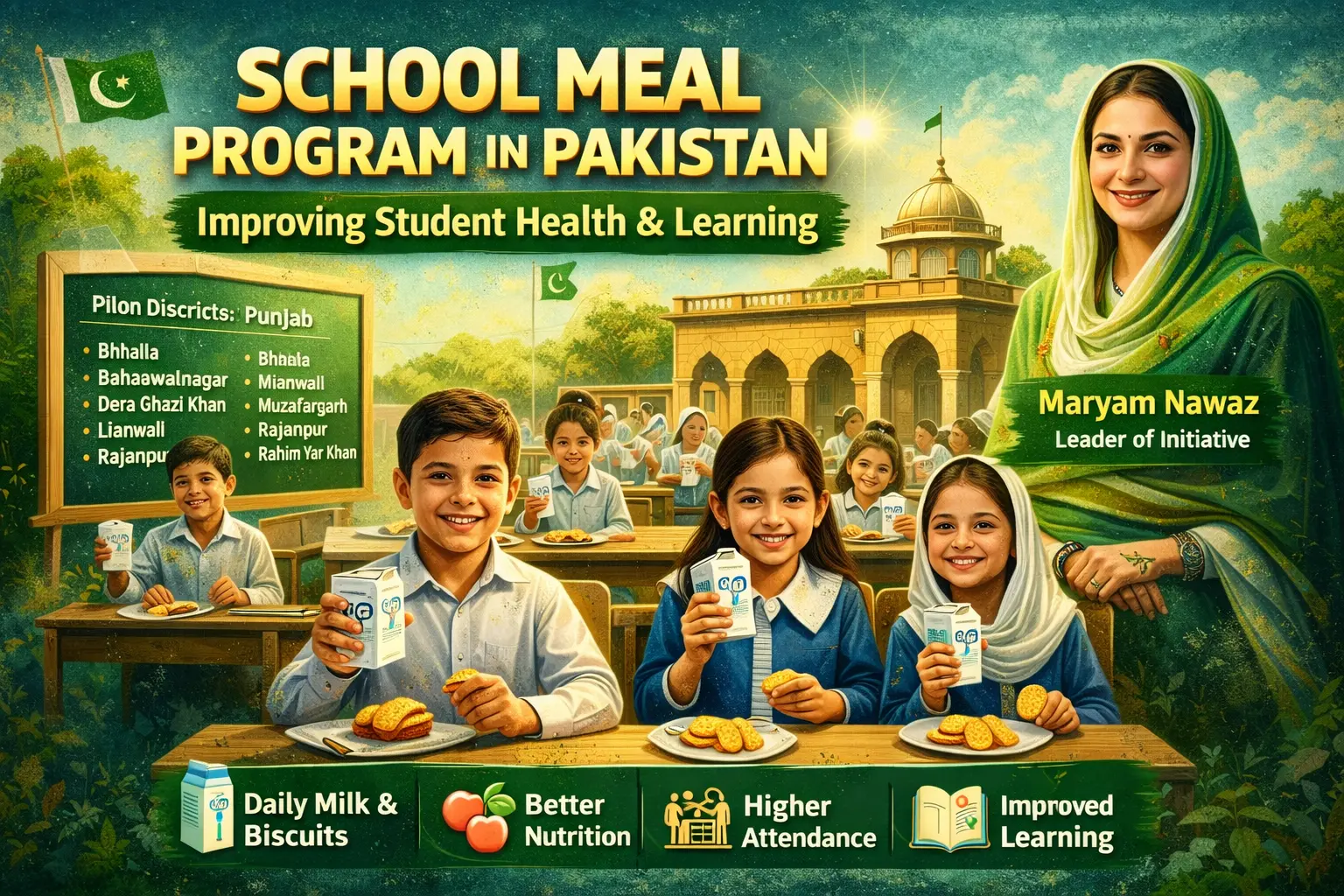
School Meal Program in Pakistan Improving Student Health and Learning
The School Meal Program in Pakistan is emerging as a practical solution to two major challenges: child malnutrition and poor academic performance. Launched under the leadership of Maryam Nawaz, this initiative aims to provide essential nutrition to schoolchildren, helping them stay healthy and perform better in their studies.
This article explains everything about the School Meal Program in simple English, including its goals, benefits, implementation, and long-term impact.
What Is the School Meal Program?
The School Meal Program is a government initiative designed to provide daily food to students in public schools. The goal is to ensure that children receive basic nutrition during school hours, especially those who come from underprivileged backgrounds.
Many children in Pakistan attend school without eating a proper meal. This affects their ability to focus, learn, and stay active. The program addresses this issue by providing simple but nutritious food items regularly.
Why the School Meal Program Is Important
Malnutrition is a serious issue in many parts of Pakistan. When children do not get enough nutrients, it affects both their physical growth and mental development.
Key Reasons This Program Matters:
- Children learn better when they are not hungry
- Proper nutrition improves brain function
- Healthy students attend school more regularly
- It reduces the chances of dropping out
By tackling hunger, the School Meal Program helps create a better learning environment for students.
Goals and Objectives of the Program
The School Meal Program has clear and impactful objectives. These goals focus on improving both health and education outcomes.
Main Objectives:
- Improve Child Health: Provide essential nutrients for growth
- Increase School Attendance: Encourage students to come to school daily
- Boost Academic Performance: Help students focus better in class
- Reduce Dropout Rates: Keep children engaged in education
- Support Long-Term Development: Build a healthier and educated generation
These objectives show that the program is not just about food—it is about shaping the future.
Pilot Districts in Punjab
To test its effectiveness, the program has been launched in selected districts of Punjab. These areas were chosen due to higher levels of poverty and malnutrition.
Districts Included:
- Bhakkar
- Bahawalnagar
- Dera Ghazi Khan
- Layyah
- Rajanpur
- Mianwali
- Muzaffargarh
- Rahim Yar Khan
This pilot phase allows the government to monitor results and improve the program before expanding it to other regions.
Who Benefits from the School Meal Program?
The School Meal Program is already benefiting a large number of students across Punjab.
Current Impact:
- Over 400,000 students are receiving meals
- Implemented in 3,527 government schools
- Focused mainly on undernourished children
These numbers show that the program is making a real difference, even in its early stages.
What Food Is Provided?
The program provides simple, affordable, and nutritious food items to students on a daily basis.
Daily Meal Includes:
- A pack of milk
- A serving of biscuits
These items are rich in essential nutrients like calcium, vitamins, and energy, which are important for growing children.
While the meal may seem simple, it plays a crucial role in improving students’ overall health.
Environmental Impact and Recycling Initiative
One unique feature of the School Meal Program is its focus on environmental sustainability.
After consumption, used milk packs are collected and recycled. The money generated from recycling is then reinvested into schools.
Benefits of Recycling Initiative:
- Promotes environmental awareness among students
- Reduces waste and pollution
- Generates additional funds for school improvement
- Encourages responsible habits in children
This makes the program beneficial not only for students but also for the environment.
7 Powerful Benefits of the School Meal Program
The School Meal Program offers multiple advantages that go beyond just providing food.
Key Benefits:
- Better Nutrition
Students receive essential nutrients daily, improving their health - Improved Concentration
Well-fed students can focus better during lessons - Higher Attendance Rates
Students are more motivated to attend school regularly - Enhanced Academic Performance
Nutrition directly supports learning ability and memory - Reduced Dropout Rates
Students are less likely to leave school early - Support for Families
Parents feel relieved knowing their children get food at school - Environmental Awareness
Recycling teaches students about sustainability
These benefits show how a simple program can create long-term positive effects.
How the Program Improves Education
Education and nutrition are closely linked. A hungry child cannot concentrate, which leads to poor academic results.
The School Meal Program improves education by:
- Increasing student participation in class
- Helping children stay active and alert
- Reducing fatigue and weakness
- Encouraging regular school attendance
As a result, teachers can deliver lessons more effectively, and students can learn with full attention.
Future Scope of the Program
The School Meal Program is currently in its pilot phase, but its success could lead to expansion across Pakistan.
Potential Future Developments:
- Expansion to all provinces
- Inclusion of more nutritious food items
- Increased funding and partnerships
- Integration with other education programs
If scaled nationwide, this initiative could benefit millions of children and transform the education system.
FAQs About School Meal Program
1. What is the School Meal Program?
It is a government initiative that provides daily food like milk and biscuits to schoolchildren to improve health and learning.
2. Who launched the program?
The program was introduced under the leadership of Maryam Nawaz.
3. Which students benefit the most?
Undernourished students in government schools, especially in rural and low-income areas.
4. What food is provided?
Students receive a daily pack of milk and biscuits.
5. How does it help education?
It improves focus, increases attendance, and enhances overall academic performance.
Conclusion
The School Meal Program is a powerful step toward solving two major problems in Pakistan: hunger and poor education outcomes. By providing basic nutrition to students, the program ensures that children can learn effectively and grow into healthy individuals.
Its success in pilot districts shows strong potential for nationwide expansion. If implemented on a larger scale, it can play a key role in building a stronger, healthier, and more educated society.
Disclaimer
This article is for informational purposes only. While every effort has been made to provide accurate and up-to-date information, program details, policies, and implementation strategies may change over time. Readers are advised to visit official government sources for the latest updates regarding the School Meal Program in Pakistan.