
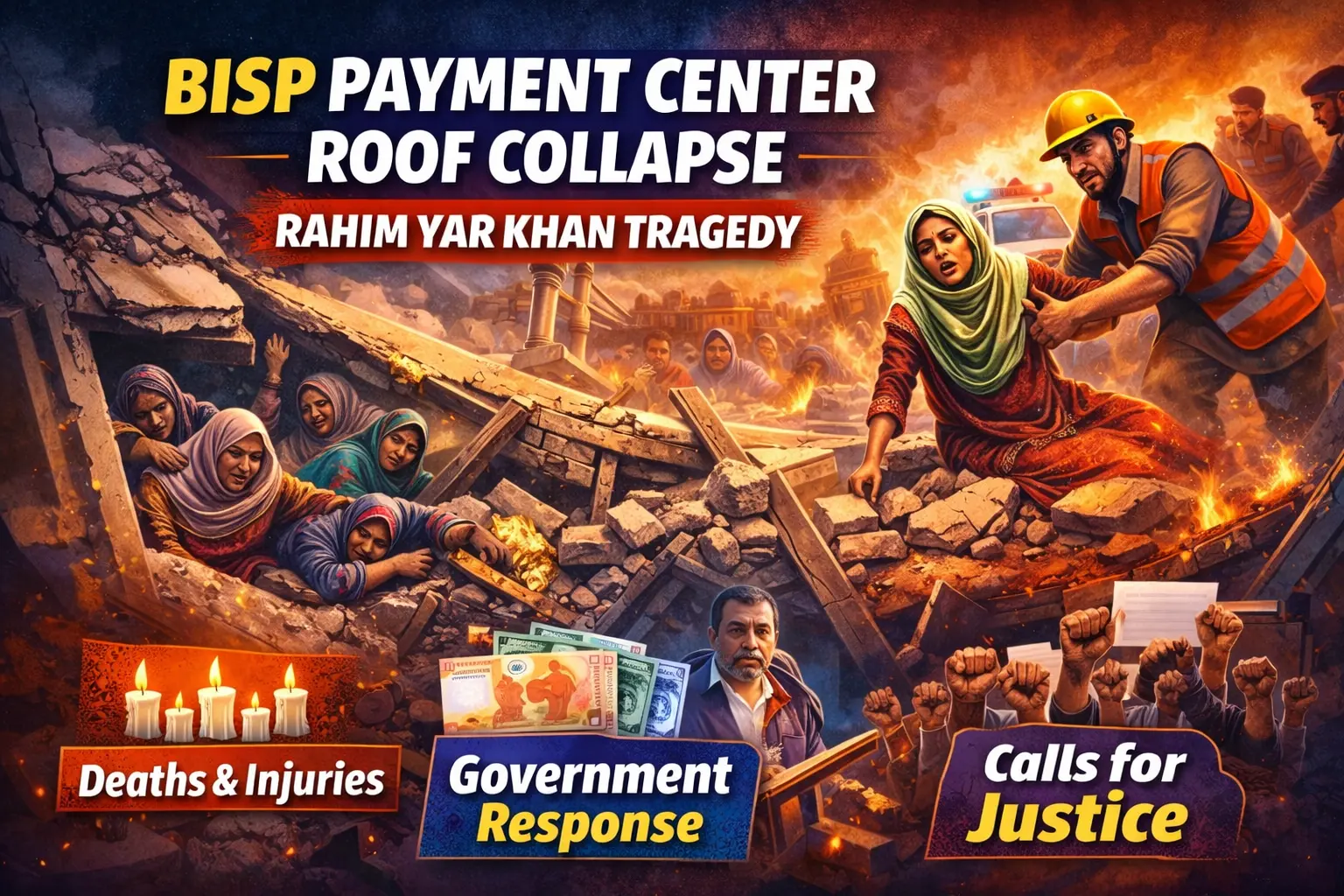
Roof Collapse at BISP Center: A Shocking Incident Before Eid in Punjab
A tragic incident in Rahim Yar Khan has deeply saddened people across the country. Just days before Eid, a visit meant to provide financial relief turned into a disaster for many women. The collapse of a roof at a payment site created panic, caused injuries, and led to heartbreaking loss of life.
This unfortunate event has raised serious questions about safety arrangements, crowd control, and the responsibility of authorities managing public service centers. It also highlights the risks faced by vulnerable individuals who depend on such programs for financial support.
What Led to the Incident
The event took place in a rural area where a large number of women had gathered to receive financial assistance. The turnout was far greater than expected, and the available space was not enough to accommodate everyone safely.
In an attempt to manage the situation, some individuals were directed to move to an upper portion of the building. However, the structure was not designed to bear such pressure. Within a short span of time, the roof collapsed, trapping people underneath.
The sudden collapse created fear and confusion. Many tried to escape quickly, leading to further chaos. What started as an organized activity quickly turned into a scene of distress.
Factors That Contributed to the Collapse
Understanding the reasons behind this tragedy is important to avoid similar situations in the future. Several issues appear to have played a role.
Overcrowding
The number of people present at the location exceeded the safe limit of the building. When too many individuals gather in a confined space, the risk of structural failure increases significantly.
Weak Infrastructure
Reports suggest that the building was not in strong condition. It may have been old or poorly maintained, making it unable to handle additional weight. Using such a structure for a large gathering increased the danger.
Lack of Proper Management
There seemed to be no effective system to organize the crowd. Instead of controlling the flow of people, decisions were made that put more individuals in unsafe areas. This lack of planning contributed to the outcome.
Absence of Safety Inspections
Before using a building for public services, proper checks should be carried out. In this case, there are concerns that no thorough inspection was conducted to ensure the location was safe.
Human Impact and Losses
The collapse resulted in a painful loss of life and left many others injured. Several women lost their lives, while dozens suffered injuries of varying severity.
Some victims experienced serious trauma, including head injuries. Emergency responders worked quickly to rescue those trapped and transport them to nearby hospitals.
Medical teams faced a challenging situation as they treated a large number of patients at once. Despite their efforts, the incident has left families grieving and communities in shock.
Emergency Response
Rescue operations began soon after the incident. Teams arrived at the location to remove debris and search for survivors. Their immediate focus was to save lives and provide urgent medical assistance.
Ambulances transported the injured to hospitals, where doctors and staff were placed on high alert. Medical facilities worked under pressure to stabilize patients and handle the sudden influx of cases.
The swift response helped reduce further loss, but the scale of the incident had already caused significant damage.
Government Actions and Support
Following the tragedy, authorities reacted by announcing financial assistance for affected families. Compensation was promised to those who lost loved ones, as well as to individuals who sustained injuries.
Leaders expressed sorrow over the incident and assured the public that steps would be taken to prevent similar events in the future. An investigation was also ordered to determine the causes and identify those responsible.
Officials have emphasized the need for accountability and better planning in public service operations.
Public Reaction
The incident sparked strong reactions among local residents and the wider community. Many people expressed anger over the apparent negligence and demanded strict action.
Protests and calls for justice highlighted the frustration of citizens who expect safer arrangements, especially in programs designed to support vulnerable populations.
The tragedy has also started a broader discussion about the importance of safety standards in public spaces.
Key Lessons to Learn
This event serves as a serious warning about the consequences of poor planning and lack of oversight.
Importance of Crowd Control
Managing large gatherings requires proper systems and trained personnel. Without organization, even a small issue can escalate into a major crisis.
Need for Safe Infrastructure
Buildings used for public purposes must meet safety requirements. Regular inspections and maintenance are essential to ensure they can handle expected loads.
Responsibility of Authorities
Organizations responsible for public services must prioritize safety above convenience. Proper arrangements can prevent tragedies and protect lives.
Proactive Planning
Instead of reacting after an incident, preventive measures should be taken in advance. This includes risk assessment, emergency planning, and clear guidelines.
Frequently Asked Questions
What caused the roof to collapse?
The main reasons appear to be excessive crowd pressure and a weak building structure that could not support the load.
How many people were affected?
Several women lost their lives, while many others were injured, with some cases reported as serious.
What support has been announced for victims?
Financial compensation has been promised for families of those who died and for individuals who were injured.
Are authorities investigating the incident?
Yes, an inquiry has been initiated to find out what went wrong and who is responsible.
How can such incidents be avoided in the future?
Better planning, strict safety checks, and proper crowd management can help prevent similar tragedies.
Conclusion
The incident in Rahim Yar Khan is a painful reminder of how quickly negligence can lead to disaster. A situation that should have provided relief instead resulted in loss and suffering.
As families cope with their grief, it is essential for authorities to take meaningful action. Ensuring safe environments, improving systems, and holding responsible parties accountable are necessary steps.
Real change will only happen when safety becomes a priority at every level. Without that commitment, the risk of similar incidents remains.