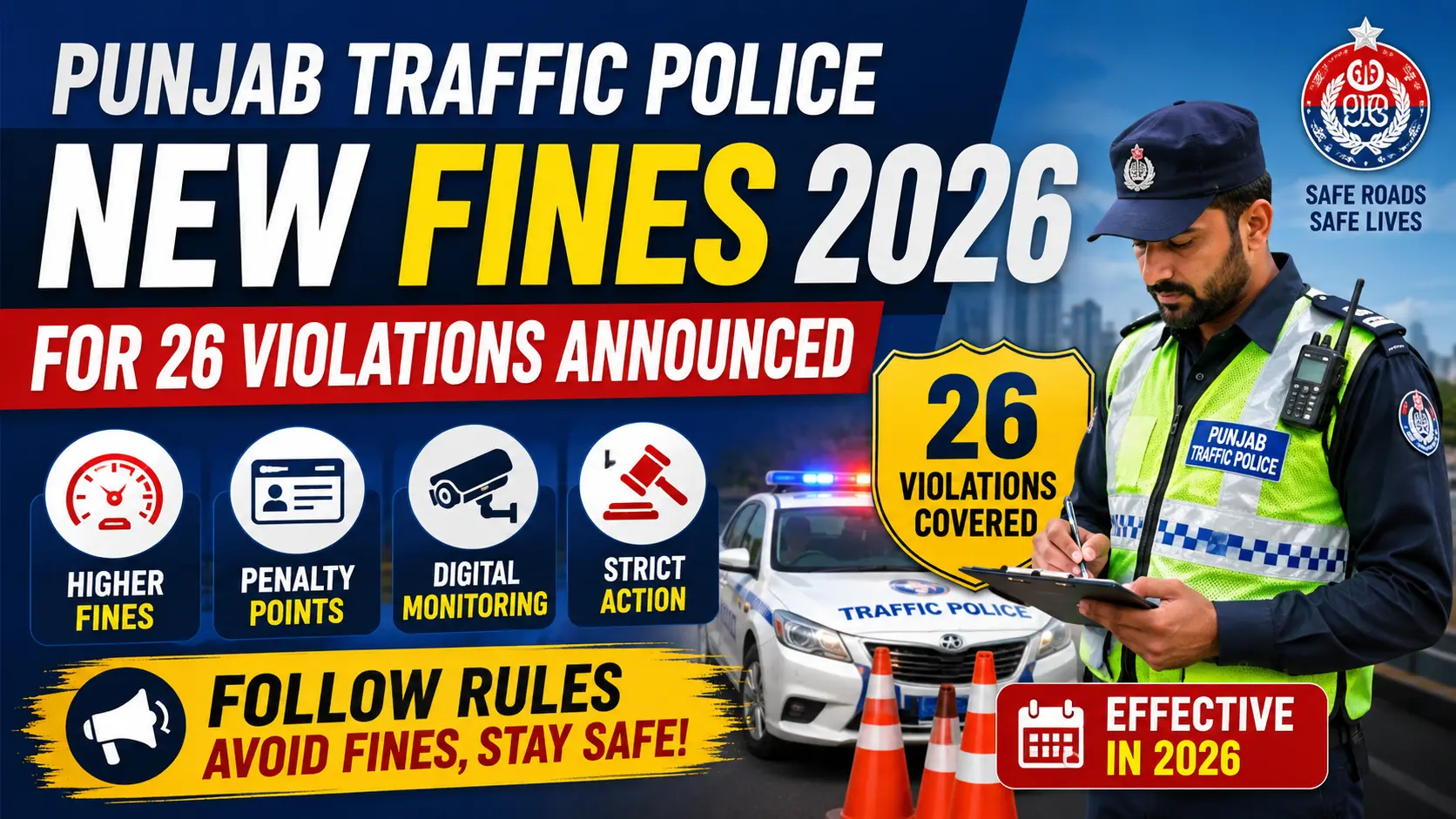
Punjab Traffic Police New Fines 2026 for 26 Violations Announced
Punjab Traffic Police has officially introduced new traffic fines and stricter enforcement rules in 2026. The Punjab government updated the Motor Vehicle Regulations to improve road safety, reduce accidents, and control dangerous driving behavior across the province.
According to the latest notification published in May 2026, drivers violating traffic laws will now face higher challans, penalty points, and stronger legal action. The new rules apply to motorcycles, cars, public transport vehicles, commercial vehicles, and heavy transport vehicles.
The government says the updated system is designed to encourage responsible driving and create safer roads for everyone.
Punjab Introduces Strict Traffic Enforcement in 2026
Traffic congestion and road accidents have increased rapidly in Punjab during recent years. Due to rising complaints about reckless driving, overspeeding, wrong way driving, and signal violations, the provincial government decided to revise traffic regulations.
The revised traffic challan system focuses on:
Main Objectives of New Traffic Rules
Improve Road Safety
The government wants to reduce fatal accidents and serious injuries on roads and highways.
Reduce Traffic Violations
Higher fines are expected to discourage careless driving and repeated offences.
Strengthen Law Enforcement
Traffic police are now using advanced digital systems, cameras, and e challan technology for better monitoring.
Encourage Responsible Driving
Drivers are being encouraged to follow traffic rules strictly and maintain discipline on roads.
Overspeeding Fines Increased Across Punjab
Overspeeding has become one of the biggest causes of road accidents in Punjab. Under the revised rules, overspeeding penalties have been increased significantly.
New Overspeeding Fine Details
Motorcycle and Three Wheeler Drivers
Motorcycle riders and three wheeler drivers may face fines starting from Rs. 2,000.
Car Drivers
Car drivers and light transport vehicle operators may receive higher challans depending on the speed limit violation.
Heavy Transport Vehicles
Heavy vehicles such as buses and trucks can face fines up to Rs. 10,000.
Penalty Points for Overspeeding
Drivers caught overspeeding may also receive four penalty points on their driving record. Repeated offences may lead to stricter action in the future.
Heavy Penalties for Reckless and Dangerous Driving
Punjab Traffic Police has also announced strict penalties for reckless and negligent driving.
Dangerous Driving Includes
Rash Driving
Driving carelessly at high speed or without caution.
Zigzag Driving
Changing lanes aggressively and dangerously.
Ignoring Traffic Rules
Breaking traffic signals and violating lane discipline.
Endangering Pedestrians
Driving in a way that creates danger for people walking on roads.
Fine Amount for Dangerous Driving
Under the new regulations, fines may reach up to Rs. 10,000 depending on the severity of the offence and the vehicle category.
Traffic authorities may also issue additional penalty points for repeat offenders.
Driving Without a Valid License
The Punjab government has tightened rules for people driving without valid licenses.
New Fine Structure
Motorcycle Riders Without License
Motorcycle riders can face fines starting from Rs. 2,000.
Car Drivers
Car drivers may receive higher penalties for driving without proper documents.
Commercial Vehicle Operators
Commercial drivers can face fines up to Rs. 5,000.
Authorities have advised citizens to always carry valid licenses while traveling.
New Rules for Fitness Certificates
Commercial and public transport vehicles must now carry valid fitness certificates.
Why Fitness Certificates Matter
Fitness certificates confirm that vehicles are mechanically safe and suitable for road use.
Officials say many accidents occur because of poorly maintained vehicles, especially heavy transport vehicles.
Penalty for Missing Fitness Certificate
Vehicles operating without valid fitness documents may face fines up to Rs. 5,000.
Signal Violations and Wrong Way Driving
Signal breaking and wrong way driving remain serious traffic issues in many Punjab cities.
New Penalties Introduced
Traffic Signal Violations
Drivers violating red signals can receive heavy challans.
Wrong Way Driving
Wrong way driving may result in fines, penalty points, and further legal action.
Increased CCTV Monitoring
Traffic police have expanded camera surveillance and digital monitoring systems at major intersections.
Motorcyclists are especially being monitored due to increasing wrong way driving incidents.
Action Against Mobile Phone Usage While Driving
Using mobile phones during driving is now under stricter enforcement.
Violations Include
Calling While Driving
Drivers using phones while driving may receive challans.
Texting During Driving
Sending messages while operating vehicles is considered dangerous driving behavior.
Using Phones Without Hands Free
Drivers may face penalties for unsafe mobile phone use.
Authorities say distracted driving greatly increases accident risks and threatens public safety.
Illegal Parking and Route Permit Violations
Illegal parking causes major traffic congestion in busy cities and commercial areas.
New Enforcement Measures
Parking in Prohibited Areas
Vehicles parked illegally may receive fines and towing action.
Public Transport Route Violations
Public transport vehicles violating approved routes may also face penalties.
Traffic wardens have been instructed to improve parking management in crowded urban areas.
New Helmet and Motorcycle Safety Rules
Motorcyclists are among the most affected groups under the revised challan system.
Violations Include
Riding Without Helmet
Motorcycle riders without helmets can receive challans.
Carrying More Than Two Persons
Triple riding is now under stricter enforcement.
Violating Motorcycle Safety Rules
Other motorcycle safety violations may also result in penalties.
Road safety experts say helmets help reduce serious head injuries during accidents.
Pressure Horns and Smoke Emission Rules
The Punjab government is also targeting environmental pollution and noise pollution.
New Restrictions Include
Pressure Horn Usage
Using pressure horns in silence zones is prohibited.
Excessive Smoke Emission
Vehicles producing heavy smoke may face challans.
Modified Noisy Exhaust Systems
Illegal exhaust modifications are also included in enforcement actions.
Hospitals, schools, courts, and residential areas are considered sensitive zones where pressure horns are banned.
Fake Number Plates and Illegal Identification
Traffic police have started strict action against fake and non standard number plates.
Violations Include
Fancy Number Plates
Decorative or unreadable plates are not allowed.
Fake Registration Plates
Using fake plates may result in serious legal action.
Altered Vehicle Identification Numbers
Tampering with vehicle identification details is strictly prohibited.
Fine Amount
Drivers violating these rules may face fines up to Rs. 5,000.
Introduction of Penalty Point System
One of the biggest changes in 2026 traffic rules is the penalty point system.
How the System Works
Traffic Offences Carry Points
Every traffic violation has assigned penalty points.
Repeated Violations Increase Points
Drivers repeatedly breaking laws will continue collecting points.
Additional Restrictions Possible
Drivers with excessive points may face stricter penalties and legal restrictions.
The government believes this system will help control habitual traffic offenders.
Expansion of Digital E Challan Systems
Punjab Traffic Police is rapidly expanding digital traffic enforcement systems.
New Technology Being Used
CCTV Surveillance
Cameras are monitoring traffic violations in major cities.
E Challan Systems
Digital challans are being issued automatically.
Safe City Cameras
Advanced surveillance systems are helping authorities track violations.
Digital License Verification
Traffic police can now verify licenses electronically.
This technology based approach aims to improve transparency and reduce manual enforcement errors.
Public Reaction to New Traffic Fines
The revised challan system has received mixed reactions from the public.
Citizens Supporting the Rules
Many people believe stricter enforcement is necessary to control careless driving and reduce accidents.
Concerns Raised by Citizens
Some citizens believe the government should also focus on:
Better Roads
Improving road conditions and infrastructure.
Better Traffic Signals
Upgrading traffic management systems.
Public Awareness Campaigns
Educating drivers about traffic safety.
Driver Training Programs
Improving driving education standards.
Safety Tips for Drivers
Drivers can avoid heavy fines and penalty points by following traffic laws carefully.
Important Safety Guidelines
Carry Valid Driving License
Always keep your driving license with you.
Wear Helmets
Motorcycle riders should wear helmets at all times.
Avoid Overspeeding
Drive within speed limits.
Follow Lane Discipline
Use proper lanes and avoid dangerous lane changes.
Avoid Mobile Phone Usage
Do not use mobile phones while driving.
Use Standard Number Plates
Ensure vehicle registration plates follow official rules.
Follow Traffic Signals
Always obey traffic lights and road signs.
Responsible driving not only helps avoid fines but also protects lives.
Conclusion
Punjab Traffic Police New Fines 2026 represent one of the biggest updates to traffic enforcement laws in recent years. With increased challans, digital monitoring, penalty points, and stricter enforcement, the government aims to improve road safety and reduce traffic violations across Punjab.
Drivers are strongly advised to understand the updated rules and follow traffic laws carefully to avoid heavy fines and legal complications. As enforcement becomes stricter in 2026, responsible driving will play an important role in creating safer roads for everyone.
Disclaimer
This article is for informational purposes only. Traffic fines, challan amounts, and enforcement policies may change according to official Punjab government notifications and traffic police updates. Citizens should verify the latest rules through official government sources before taking any legal or driving related decisions.