Punjab AZAG Housing Scheme 2026 – Free 3 Marla Plot Eligibility & Full Guide
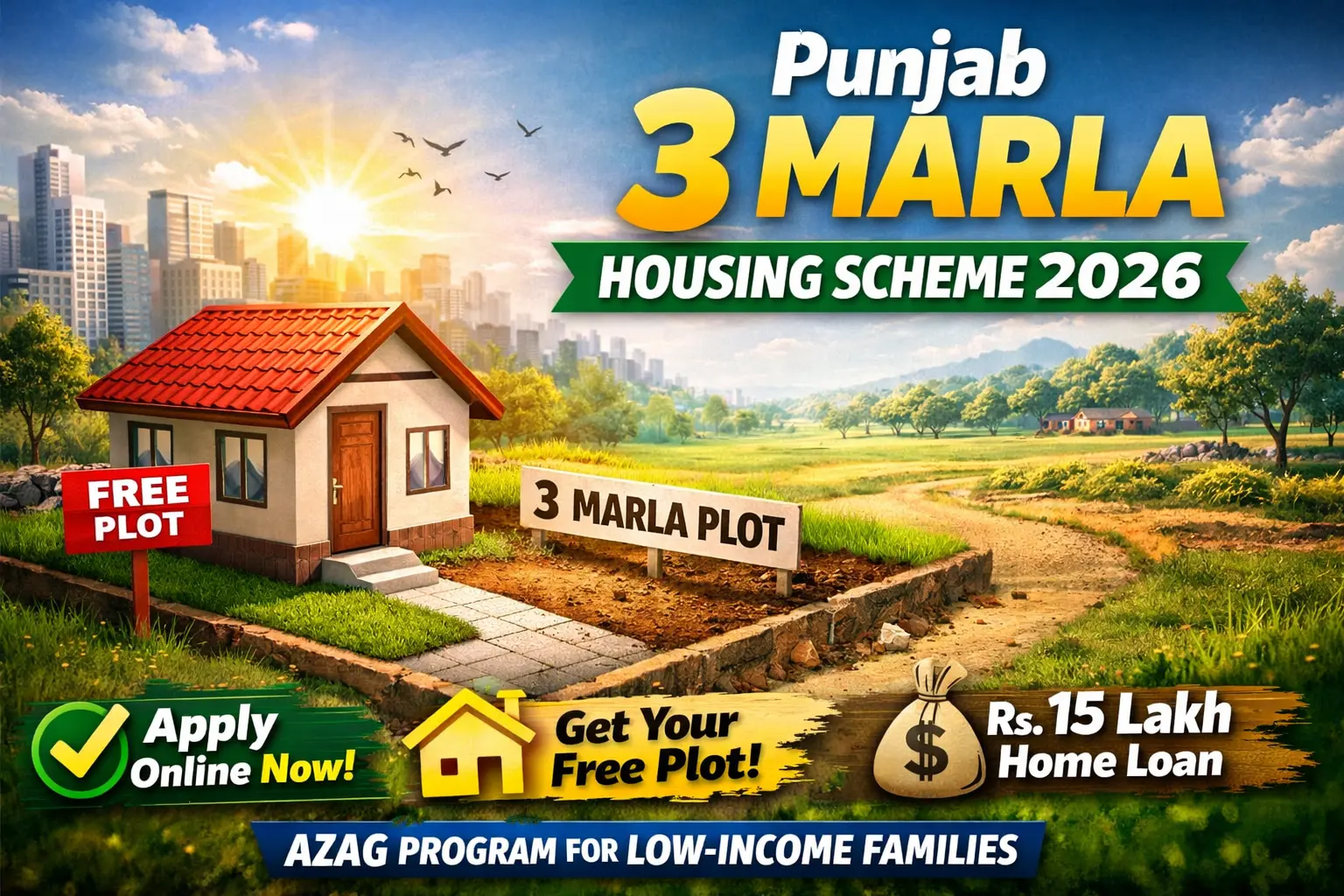
The Government of Punjab has introduced a major housing initiative under the Apni Zameen Apna Ghar (AZAG) program for 2026. This program is designed to support families who are struggling financially and do not have access to personal housing or land ownership anywhere in the country. The core idea behind this initiative is to help deserving citizens move toward stable living conditions by providing residential land free of cost through a transparent selection system.
Unlike traditional housing support programs, this scheme focuses on long-term ownership rather than temporary relief. Beneficiaries will be given small residential plots that can be used to build permanent homes, helping them secure a stable future for their families.
Purpose of the Scheme
The main goal of this housing initiative is to reduce homelessness and provide basic shelter opportunities to low-income households. Many families in Punjab live on rent or in unsafe conditions due to rising property prices. This program aims to bridge that gap by offering them land ownership without any purchase cost.
The government has also emphasized transparency, fairness, and digital verification to ensure that only eligible and deserving applicants are selected.
Who Can Apply? Eligibility Conditions Explained
To maintain fairness and prevent misuse, strict eligibility rules have been introduced. Applicants must fulfill all conditions before applying:
Residency Requirement
Applicants must be permanent residents of Punjab and must be able to verify their identity through a valid national identification document.
No Property Ownership
The applicant, their spouse, and dependent family members must not own any residential plot, house, or agricultural land anywhere in Pakistan.
District-Based Application
Applications must be submitted according to the applicant’s current residential district. Submitting from another district may lead to rejection.
Financial Clean Record
Individuals with unpaid bank loans, default cases, or major financial violations are not eligible for this program.
Legal Background Check
Applicants should not be involved in any criminal activity or ongoing court cases that question their eligibility.
Honest Declaration
Any false information, hidden assets, or incorrect documentation will result in permanent disqualification from the program.
🏘️ Project Overview and Phase Distribution
In the first stage of implementation, the government has planned to distribute approximately 2,000 residential plots across multiple regions of Punjab. These allocations are divided strategically across divisions to ensure balanced development and equal opportunity.
Regional Allocation Summary
- Rawalpindi region: 658 plots across 5 districts
- Faisalabad region: 288 plots across 5 districts
- Lahore region: 518 plots across 3 districts
- Bhakkar region: 131 plots across 7 districts
- Multan region: 270 plots across 5 districts
- Bahawalpur region: 27 plots across 3 districts
This distribution strategy is designed to support both urban and rural populations, ensuring that no region is ignored in the development process.
Application Method – Online Registration System
The Punjab government has introduced an official online portal to manage applications digitally. This system reduces paperwork, eliminates middlemen, and ensures a fair selection process.
Step-by-Step Application Process:
- Visit the official government housing portal when it becomes active
- Create an account using your CNIC and contact information
- Fill out the application form with accurate personal details
- Upload required documents such as identity card, income proof, and declaration of non-ownership
- Submit the form and save your tracking ID for future reference
Once submitted, applications will go through a verification stage where government authorities will review financial and legal eligibility.
Rules After Allotment
Winning a plot under this scheme comes with certain responsibilities. The government has introduced strict conditions to ensure that land is used properly and not misused for profit.
Construction Timeline
- Construction must begin within 6 months after possession
- The structure must be completed within 2 years
- All construction must follow approved building regulations
Transfer Restrictions
- The property cannot be sold or transferred for at least 5 years
- Any violation will lead to cancellation of ownership rights
Usage Limitation
- The land must be used only for residential purposes
- Commercial activity or renting is not allowed
Monitoring System
Authorities may inspect construction progress at any stage. Failure to follow rules can result in legal action and cancellation without compensation.
Verification and Monitoring
The Housing Department has introduced a monitoring authority to ensure transparency. Each application will be checked against multiple databases, including property records and financial history. This reduces the chances of fraud and ensures that only truly eligible families benefit.
In case of disputes or complaints, a grievance committee will handle cases and make final decisions based on evidence.
Government Vision Behind the Program
The leadership behind this initiative believes that housing is a fundamental necessity rather than a privilege. By offering land ownership opportunities, the government aims to reduce poverty, improve living standards, and promote long-term stability for vulnerable families.
This approach also supports economic growth, as new housing development encourages construction activity and creates job opportunities in local communities.
Important Advice for Applicants
Applicants should be very careful while submitting their information. Even small mistakes or false declarations can lead to permanent rejection. It is recommended to prepare all documents in advance and ensure accuracy before applying.
Avoid relying on unofficial agents or third-party services claiming guaranteed approval, as the process is fully digital and government-controlled.
Final Summary
The AZAG Punjab 2026 housing initiative is one of the most significant welfare programs introduced for low-income families. It focuses on providing real ownership opportunities rather than temporary assistance. With strict eligibility rules, transparent digital applications, and structured distribution, the program aims to ensure fairness for all applicants.
For families struggling without property or stable housing, this scheme represents a rare chance to build a permanent home and secure long-term stability.