
Pakistan Aviation Sector Suffers Rs. 20 Billion Loss Amid Gulf Airspace Restrictions 2026 Complete Guide
The Pakistan aviation sector is facing a serious crisis after Gulf airspace restrictions disrupted many international flights in 2026. Hundreds of flights were cancelled, and thousands of passengers were affected across major airports in Pakistan.
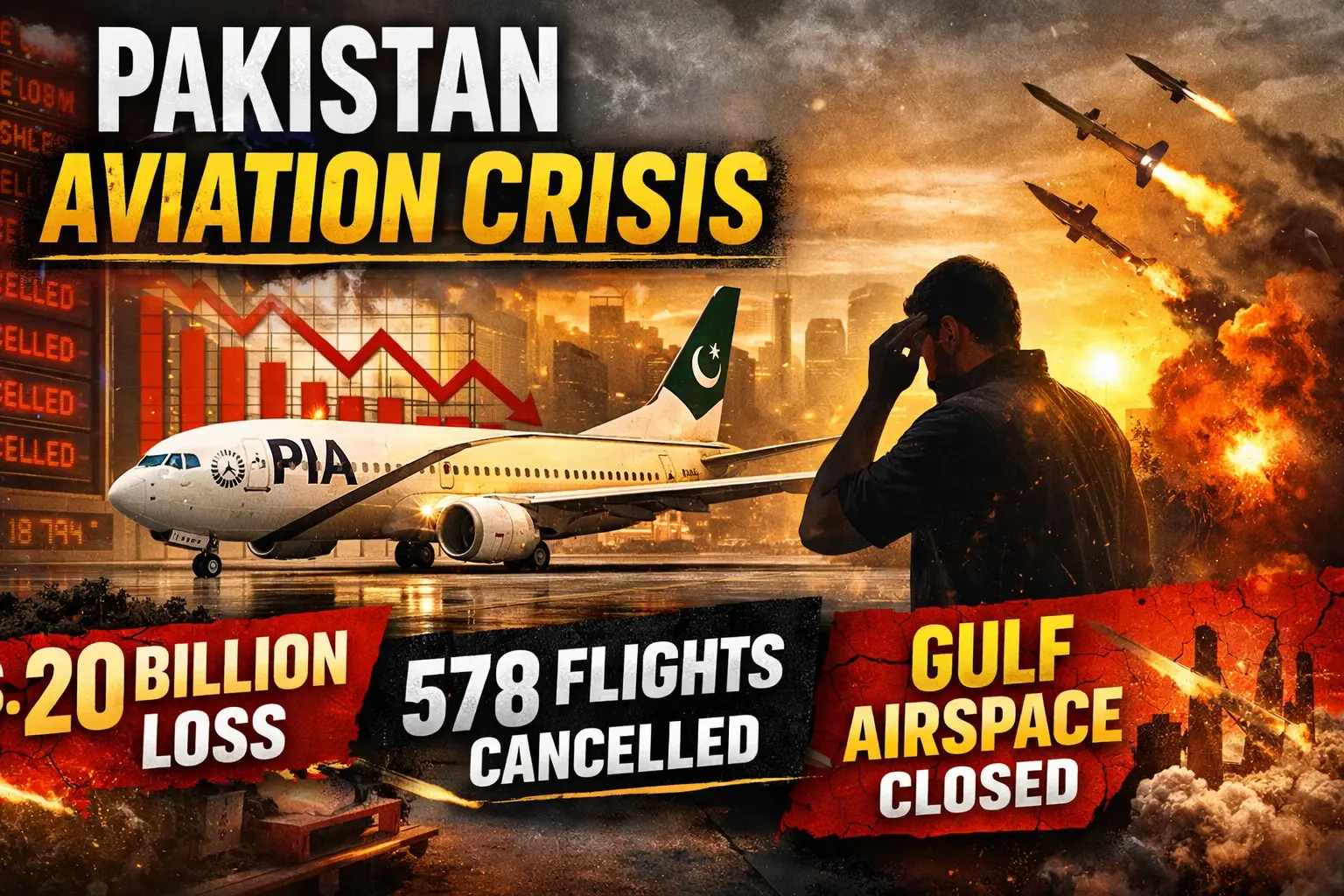
Recent aviation reports reveal that Pakistan’s aviation industry has suffered nearly Rs. 20 billion in financial losses due to these sudden disruptions. The restrictions came after rising geopolitical tensions in the Middle East, which forced airlines to suspend or reroute flights.
As a result, airports, airlines, cargo companies, and passengers have all experienced major difficulties. This article explains everything you need to know about the Pakistan aviation sector loss in 2026, including causes, affected flights, airlines, airports, and the future outlook.
Pakistan Aviation Sector Suffers Rs. 20 Billion Loss
Pakistan’s aviation industry depends heavily on international travel routes, especially flights between Pakistan and Gulf countries.
However, airspace restrictions across several Middle Eastern countries forced airlines to cancel hundreds of flights starting from February 28, 2026.
These cancellations caused major operational problems for airlines and airports. According to aviation reports, the total financial damage has reached around Rs. 20 billion within a few days.
Main Reasons for the Financial Loss
The losses came from several different areas of the aviation system, including:
- Airline ticket revenue losses
- Passenger refunds and rescheduling costs
- Airport operation losses
- Cargo shipment delays
- Extra fuel expenses due to longer flight routes
Because of these disruptions, airlines had to quickly adjust their operations to manage the crisis.
Major Flight Disruptions Across Pakistan
Flight operations across Pakistan’s main airports were severely affected. Many international flights were cancelled due to restrictions over Gulf airspace.
Airports Affected
The following airports reported major flight cancellations:
- Karachi
- Islamabad
- Lahore
- Peshawar
- Multan
- Sialkot
- Faisalabad
These airports handle a large number of international passengers travelling to the Middle East every day.
Gulf Destinations Most Affected
Flights to major Gulf cities were heavily disrupted, including:
- Dubai
- Abu Dhabi
- Doha
- Sharjah
- Kuwait
- Bahrain
- Jeddah
These cities are important travel hubs for Pakistani workers, tourists, and business travellers.
Daily Flight Cancellations
At the peak of the crisis, 162 flights were cancelled in a single day across Pakistani airports.
Passengers travelling to the Middle East experienced:
- sudden flight cancellations
- long delays at airports
- uncertain travel schedules
Many travellers had to change their travel plans or wait for rescheduled flights.
Cities Most Affected by Flight Cancellations
Below is a breakdown of the major cities that experienced the highest number of cancelled flights.
| City / Airport | Flights Cancelled | Major Destinations Affected |
|---|---|---|
| Karachi | 40 | Dubai, Doha, Abu Dhabi |
| Islamabad | 38 | Dubai, London, Doha |
| Lahore | 28 | Sharjah, Jeddah |
| Peshawar | 24 | Gulf regional hubs |
| Multan | 18 | UAE and Gulf cities |
| Sialkot | 8 | Middle East |
| Faisalabad | 6 | Gulf routes |
Among all cities, Karachi faced the highest number of cancellations, showing its importance as Pakistan’s largest international aviation hub.
Airlines Affected by the Airspace Restrictions
Both international and Pakistani airlines were affected by the Gulf airspace restrictions.
International Airlines Impacted
Several major international airlines operate regular flights between Pakistan and Middle Eastern cities.
Affected airlines include:
- Emirates
- Etihad Airways
- Qatar Airways
- Air Arabia
- Flydubai
These airlines had to cancel or reroute flights due to security concerns.
Pakistani Airlines Impacted
Local airlines also experienced serious operational challenges.
Affected Pakistani carriers include:
- Pakistan International Airlines (PIA)
- Airblue
- Fly Jinnah
These airlines rely heavily on flights to Gulf countries because thousands of Pakistani workers travel there daily.
Islamabad International Airport Faces Major Impact
Among all airports, Islamabad International Airport recorded one of the highest levels of disruption.
Since the restrictions began, nearly 180 flights have been cancelled from Islamabad airport alone.
Major Destinations Affected from Islamabad
- Dubai
- Abu Dhabi
- Doha
- London
- Bahrain
Due to uncertainty, airlines advised passengers to check flight schedules online before arriving at the airport.
Domestic Flights Also Affected
Although international flights were the main problem, some domestic flights were also disrupted.
Airlines had to change aircraft schedules and adjust routes due to international cancellations.
Domestic Routes Impacted
Some affected routes include:
- Islamabad to Gilgit
- Islamabad to Skardu
- Islamabad to Karachi
These disruptions occurred because aircraft originally assigned to domestic flights were redirected for international operations.
Airlines Using Alternative Routes
To keep flights running, airlines started using longer alternative routes that avoided restricted airspace zones.
However, these changes created several challenges.
Operational Problems Faced by Airlines
- Increased fuel consumption
- Longer travel times
- Higher airline operating costs
- Aircraft scheduling difficulties
For example, Pakistan International Airlines (PIA) used Boeing 777 aircraft on some routes because these planes can handle longer diversions.
Economic Impact on Pakistan’s Aviation Industry
The aviation sector plays a crucial role in Pakistan’s economy and international connectivity.
The Rs. 20 billion loss affects multiple areas within the aviation ecosystem.
Revenue Loss for Airlines
Airlines lost large amounts of revenue due to:
- cancelled flights
- passenger refunds
- rescheduled bookings
These issues directly reduced airline profits.
Airport Operational Losses
Airports also suffer financial losses when flights are cancelled.
Airport income usually comes from:
- landing fees
- passenger service charges
- cargo handling services
When flights stop operating, these revenue sources also decline.
Cargo Transport Delays
Air cargo services between Pakistan and Gulf countries were also disrupted.
Many industries rely on fast cargo transportation.
Industries Affected
- Textile exports
- Fresh food shipments
- E-commerce logistics
Delays in cargo delivery caused problems for businesses that depend on quick international shipping.
Passenger Problems During the Crisis
Passengers were among the most affected during the aviation crisis.
Thousands of travellers faced serious issues such as:
- cancelled flights
- sudden schedule changes
- long waiting times at airports
- delayed refunds
Many people travelling for work, family visits, or religious purposes had to change their travel plans.
Why Gulf Airspace Restrictions Matter for Pakistan
Pakistan has strong travel connections with Gulf countries.
Every day, thousands of passengers travel between Pakistan and Middle Eastern cities for:
- overseas employment
- family visits
- tourism
- business travel
Cities like Dubai, Doha, and Abu Dhabi also act as major global transit hubs.
When these routes face restrictions, the entire aviation network is affected.
Role of Geopolitical Tensions
The disruption is directly linked to rising geopolitical tensions in the Middle East.
The conflict between Iran and the United States raised security concerns across regional airspace.
Airspace restrictions are usually implemented because of:
- military operations
- missile threats
- drone attacks
- regional security risks
Airlines must avoid risky airspace to ensure passenger safety.
How Long Could the Disruptions Continue?
Aviation experts say the situation depends on political developments in the Middle East.
If tensions reduce, airspace restrictions could be removed quickly.
However, if the conflict continues, airlines may need to operate under:
- restricted routes
- longer flight paths
- limited flight schedules
This could continue to affect Pakistan’s aviation industry for several weeks.
What Passengers Should Do Right Now
Passengers planning to travel should take some precautions to avoid travel problems.
Important Travel Tips
- Check flight status before leaving home
- Stay in contact with your airline
- Arrive early at the airport
- Keep travel insurance if possible
- Be ready for flight rescheduling
These steps can help passengers manage travel disruptions more easily.
Future Outlook for Pakistan Aviation Sector
Despite the current crisis, Pakistan’s aviation sector has handled similar disruptions in the past.
Airlines and aviation authorities are working together to stabilize flight operations.
Possible Future Improvements
- Better route planning systems
- Advanced airspace monitoring
- Stronger international aviation cooperation
These improvements can help reduce the impact of future aviation disruptions.
FAQs
Why did Pakistan aviation sector lose Rs. 20 billion?
The loss happened because of flight cancellations, passenger refunds, cargo delays, and operational disruptions caused by Gulf airspace restrictions.
How many flights were cancelled in Pakistan?
More than 578 flights were cancelled after airspace restrictions began in February 2026.
Which cities were most affected?
Karachi, Islamabad, and Lahore experienced the highest number of flight cancellations.
Which airlines were affected?
Major airlines include Emirates, Etihad Airways, Qatar Airways, Air Arabia, Flydubai, PIA, Airblue, and Fly Jinnah.
Are flights still disrupted?
Yes, some routes remain affected depending on airline schedules and airspace restrictions.
Conclusion
The Pakistan aviation sector suffers Rs. 20 billion loss amid Gulf airspace restrictions in 2026, highlighting how global political tensions can quickly impact international travel.
With hundreds of flights cancelled and thousands of passengers affected, airlines are now adjusting routes, managing refunds, and working to restore normal operations.
Although the crisis has caused major challenges, aviation authorities and airlines are taking steps to stabilize the industry and reduce further disruptions.