
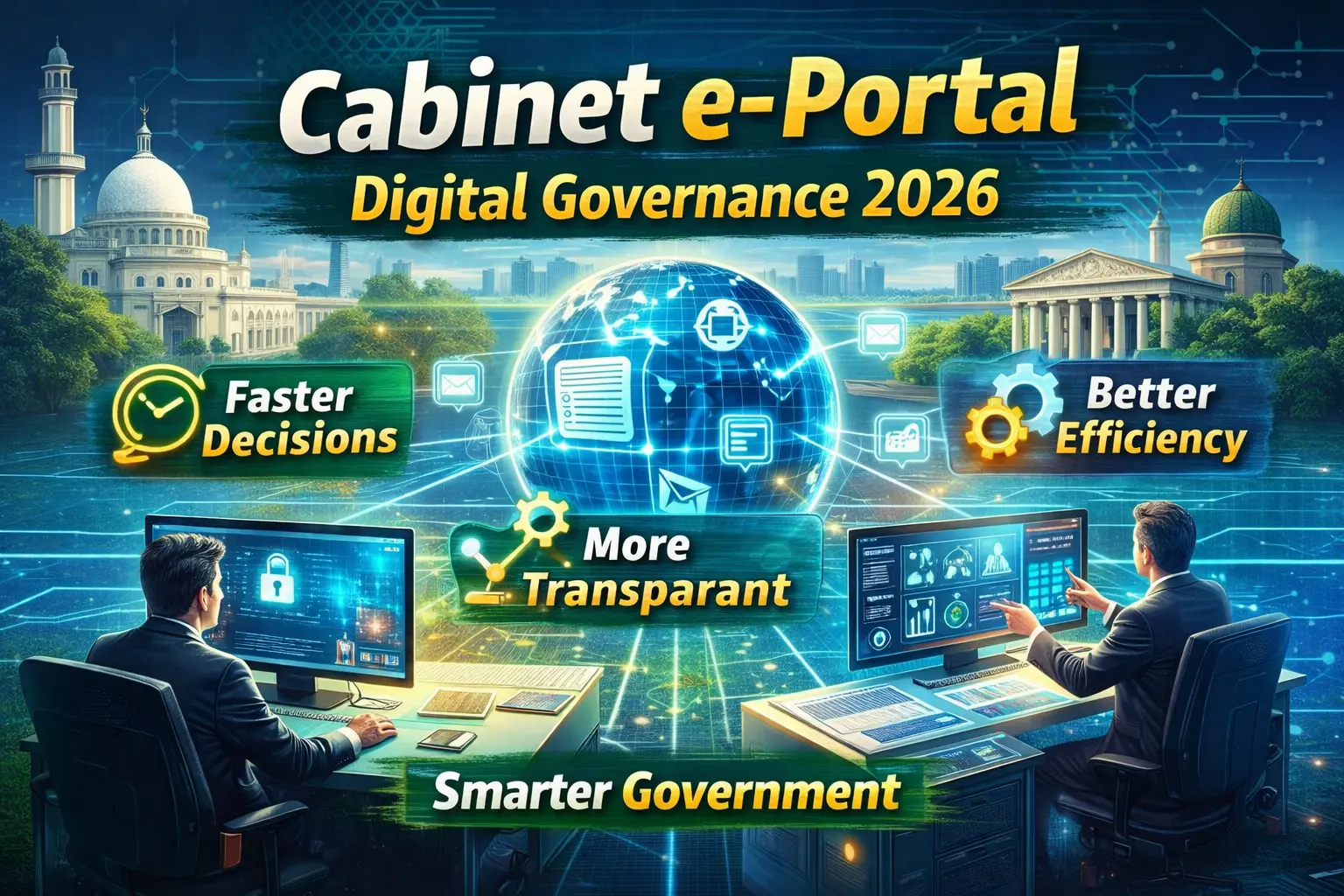
Cabinet e-Portal: Shaping the Future of Governance in 2026
In today’s fast-paced world, governments are under increasing pressure to deliver quick, transparent, and effective services. The Cabinet e-Portal has emerged as a powerful digital solution that is transforming how administrative systems function. Instead of relying on outdated manual methods, this platform introduces a smarter, technology-driven approach to managing high-level government operations.
This system is not just about digitizing files—it represents a broader shift toward modern, efficient, and accountable governance.
The Need for a Digital Governance System
For decades, government processes have depended heavily on paperwork, in-person meetings, and slow communication channels. These traditional methods often result in delays, inefficiencies, and lack of coordination between departments.
The Cabinet e-Portal addresses these issues by providing a centralized digital environment where government officials can manage tasks more effectively. Through this system, documents can be shared instantly, policies can be reviewed without delay, and decisions can be made based on real-time information.
Such advancements are essential in a time when governments must respond quickly to public needs and challenges.
Key Advantages of the Cabinet e-Portal
1. Accelerated Decision-Making
One of the most noticeable improvements brought by the Cabinet e-Portal is speed. Previously, files would move physically between offices, causing unnecessary delays.
Now, officials can access and review documents online, enabling faster approvals and smoother workflows. Real-time collaboration ensures that decisions are made without waiting for physical meetings or file transfers.
2. Greater Transparency
Transparency plays a crucial role in building trust between governments and citizens. The digital system maintains a complete record of activities, including approvals, file movements, and decisions.
This traceability reduces the chances of misconduct and ensures that every action is properly documented and accountable.
3. Increased Efficiency
Manual processes often involve repetitive tasks and higher chances of human error. By automating routine activities, the Cabinet e-Portal significantly improves productivity.
Officials can spend less time handling paperwork and more time focusing on important responsibilities such as policy development and strategic planning.
A Step Toward Digital Governance
The Cabinet e-Portal is part of a larger movement toward e-governance, where technology is used to improve public administration. Governments worldwide are adopting digital tools to enhance service delivery and streamline operations.
With the help of such platforms, authorities can respond more effectively to public concerns, manage resources better, and ensure smoother coordination among departments.
This shift is essential for building a responsive and future-ready government system.
4. Strong Data Protection
Handling sensitive information is a major responsibility for any government. The Cabinet e-Portal incorporates advanced security features to ensure that data remains safe.
Access is controlled, information is securely stored, and retrieval is quick and reliable. This reduces risks associated with lost or compromised documents.
Also read:- Punjab Electric Taxi Scheme 2026
5. Improved Coordination Between Departments
In traditional systems, departments often work independently, leading to communication gaps and delays.
The Cabinet e-Portal connects different departments through a shared platform, allowing them to collaborate efficiently. This results in better coordination, faster execution of tasks, and improved overall performance.
6. Eco-Friendly Approach
Reducing paper usage is another important advantage of digital systems. By minimizing reliance on printed documents, the Cabinet e-Portal promotes environmentally friendly practices.
This not only helps protect natural resources but also reduces operational costs associated with printing and storage.
7. Real-Time Tracking and Monitoring
The platform includes tools that allow authorities to monitor ongoing processes and track progress instantly.
Officials can identify pending tasks, detect delays, and resolve issues quickly. This ensures that workflows remain smooth and deadlines are met efficiently.
Implementation Strategy
Introducing a digital system at the government level requires careful planning. The rollout of the Cabinet e-Portal follows a structured approach to ensure success.
Training Programs
Government staff are trained to understand how the system works and how to use its features effectively.
Phased Adoption
Instead of making sudden changes, the transition from manual to digital systems is carried out gradually. This helps avoid disruption in daily operations.
Technical Assistance
Dedicated support teams are available to handle technical issues and ensure smooth functioning of the platform.
Impact on Citizens
Although the Cabinet e-Portal is primarily designed for internal government use, its benefits extend to the public.
Citizens can experience:
- Faster implementation of policies
- Improved quality of public services
- Greater openness in government operations
These improvements lead to a more efficient and citizen-friendly governance system.
Possible Challenges
Like any major transformation, the adoption of digital systems may come with certain challenges.
Some common issues include:
- Resistance from individuals accustomed to traditional methods
- Learning difficulties for new technology users
- Initial investment in infrastructure and training
However, these challenges are temporary and can be overcome with proper planning and support.
Frequently Asked Questions
What is the Cabinet e-Portal?
It is a digital platform that allows governments to manage official meetings, documents, and decision-making processes electronically.
How does it improve governance?
By increasing speed, efficiency, and transparency through digital workflows and real-time access to information.
Is the system secure?
Yes, it uses modern security measures to protect sensitive data and ensure controlled access.
Who uses this platform?
It is mainly used by government officials, cabinet members, and administrative departments.
What benefits do citizens receive?
People benefit through faster services, better decision-making, and increased transparency.
Conclusion
The Cabinet e-Portal is a significant step toward modernizing government systems. By embracing digital solutions, authorities can operate more efficiently, make better decisions, and provide improved services to the public.
As technology continues to evolve, such platforms will play a crucial role in shaping the future of governance. Moving away from traditional methods and adopting digital systems is no longer an option—it is a necessity for progress.