Smart Water Metering in Punjab: A Complete Guide to the New Water Usage System
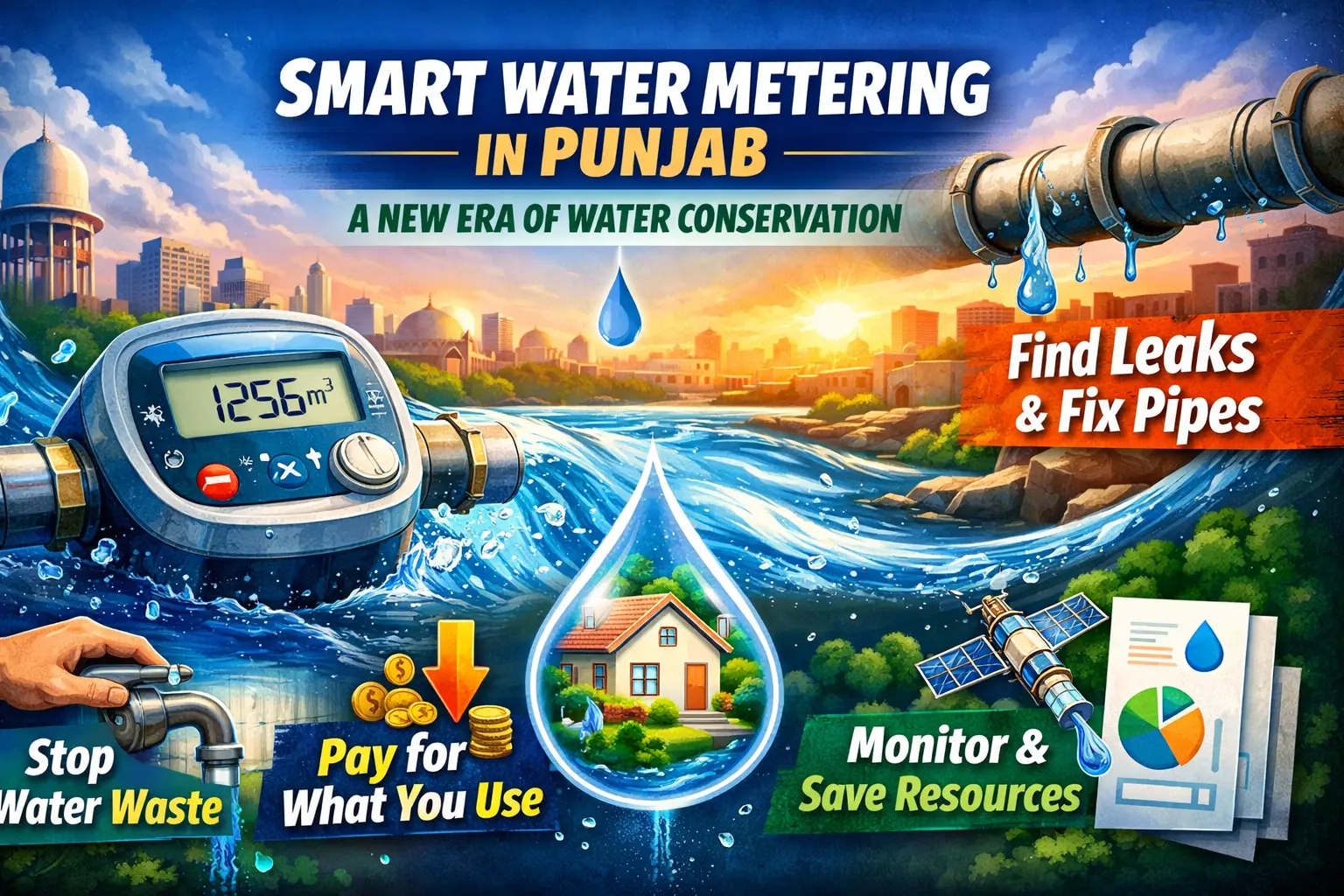
Punjab is taking a significant step toward solving its growing water crisis by introducing a modern water metering system. This initiative aims to improve how water is consumed, monitored, and billed across major urban areas. Instead of relying on outdated fixed charges, the government is moving toward a usage-based model that encourages responsibility and efficiency.
This project is not only about introducing new technology but also about changing public behavior. With water resources becoming increasingly limited, this initiative is designed to promote smarter consumption and long-term sustainability.
Why This Initiative Is Important
For many years, households and businesses in Punjab have paid a fixed amount for water regardless of how much they actually used. This system created an imbalance where careful users and heavy consumers were treated the same. As a result, there was little motivation to conserve water.
The new system introduces a more practical approach. Consumers will now be charged according to the quantity of water they use. This change is expected to encourage people to become more mindful of their daily habits.
Water scarcity is already becoming a serious concern in many cities. Without proper management, the situation could worsen in the coming years. By introducing water meters, the government aims to address this issue before it reaches a critical level.
Major Advantages of the Project
Fair and Transparent Billing
One of the biggest improvements brought by this initiative is a fair billing structure. Instead of a uniform charge, each household will receive a bill based on actual consumption.
This ensures that individuals who use less water are not penalized, while those who consume more contribute accordingly. It creates a sense of fairness and accountability among users.
Reduction in Water Waste
When people are aware that their usage directly affects their bills, they naturally become more careful. Small changes in daily routines can make a big difference.
For example, fixing leaking taps, reducing unnecessary water flow, and monitoring consumption habits can significantly lower overall usage. Studies in different regions have shown that water metering can reduce consumption by a noticeable margin.
This means that even simple behavioral changes can help conserve large amounts of water at the community level.
Improved System Efficiency
Another major benefit is better monitoring of the water supply network. A large portion of water is often lost due to leaks, damaged pipelines, or illegal connections.
With accurate data from water meters, authorities will be able to compare the amount of water supplied with what is actually consumed. This makes it easier to identify problem areas and take quick action.
In the long term, this will lead to a more efficient and reliable water distribution system.
Environmental Impact
The importance of this initiative goes beyond billing and infrastructure. It also plays a key role in protecting natural resources.
Groundwater levels in many parts of Punjab are decreasing rapidly. Over-extraction and wasteful usage have contributed to this issue. By encouraging responsible consumption, the new system helps reduce pressure on underground water reserves.
In addition, the data collected through metering will help planners make better decisions. This information can be used to design improved supply systems, develop water storage solutions, and introduce recycling methods.
Such measures are essential for ensuring that future generations have access to clean water.
How the Project Will Be Rolled Out
The implementation of this system will take place in multiple stages to ensure a smooth transition.
Installation Phase
Water meters will be installed in selected cities, covering both residential and commercial properties. This process will be handled by local authorities and relevant departments.
Awareness and Training
To help citizens adapt to the new system, awareness campaigns will be conducted. These will focus on explaining how the meters work, how to track usage, and how billing will be calculated.
This step is crucial because many people are not familiar with usage-based billing systems.
Maintenance and Support
Once installed, regular checks will be carried out to ensure that the meters function correctly. In case of faults or technical issues, repair and replacement services will be provided by the authorities.
This ensures that billing remains accurate and fair.
What Residents Should Expect
With the introduction of water meters, people will start noticing changes in their monthly bills. The amount will depend entirely on how much water is used.
This shift will encourage individuals to keep track of their consumption and make necessary adjustments. Over time, managing water usage will become a regular part of household planning.
People who adopt efficient habits will likely see lower expenses, while excessive use will result in higher charges.
Possible Challenges
Like any major reform, this initiative may face some difficulties in the beginning.
One common issue could be resistance from the public. Many people are used to the old system and may find it difficult to adjust to a new approach.
Another challenge is the lack of awareness. Without proper understanding, some users may misunderstand how the billing system works.
Technical problems during installation or operation may also occur. However, these issues can be managed with proper planning and support.
With consistent communication and transparency, these challenges can be minimized over time.
Frequently Asked Questions
How will the new billing system work?
Consumers will be charged based on the volume of water they use, similar to electricity or gas billing.
Will this increase monthly expenses?
Not necessarily. Those who use water carefully may see lower bills, while higher consumption will result in increased charges.
Who will install the meters?
The installation will be carried out by government departments and local authorities responsible for water management.
Does the system apply to homes only?
No, it will be implemented in both residential and commercial properties.
What if the meter stops working?
In case of any malfunction, residents can contact the relevant authority for repair or replacement.
Conclusion
The introduction of water metering in Punjab represents a major shift toward responsible resource management. By replacing outdated billing methods with a more accurate and fair system, this initiative encourages people to think differently about how they use water.
Beyond financial benefits, the project also supports environmental protection and long-term sustainability. Although there may be some initial challenges, the overall impact is expected to be positive.
If implemented effectively, this system can play a vital role in securing water resources for the future while promoting a culture of conservation and accountability.