
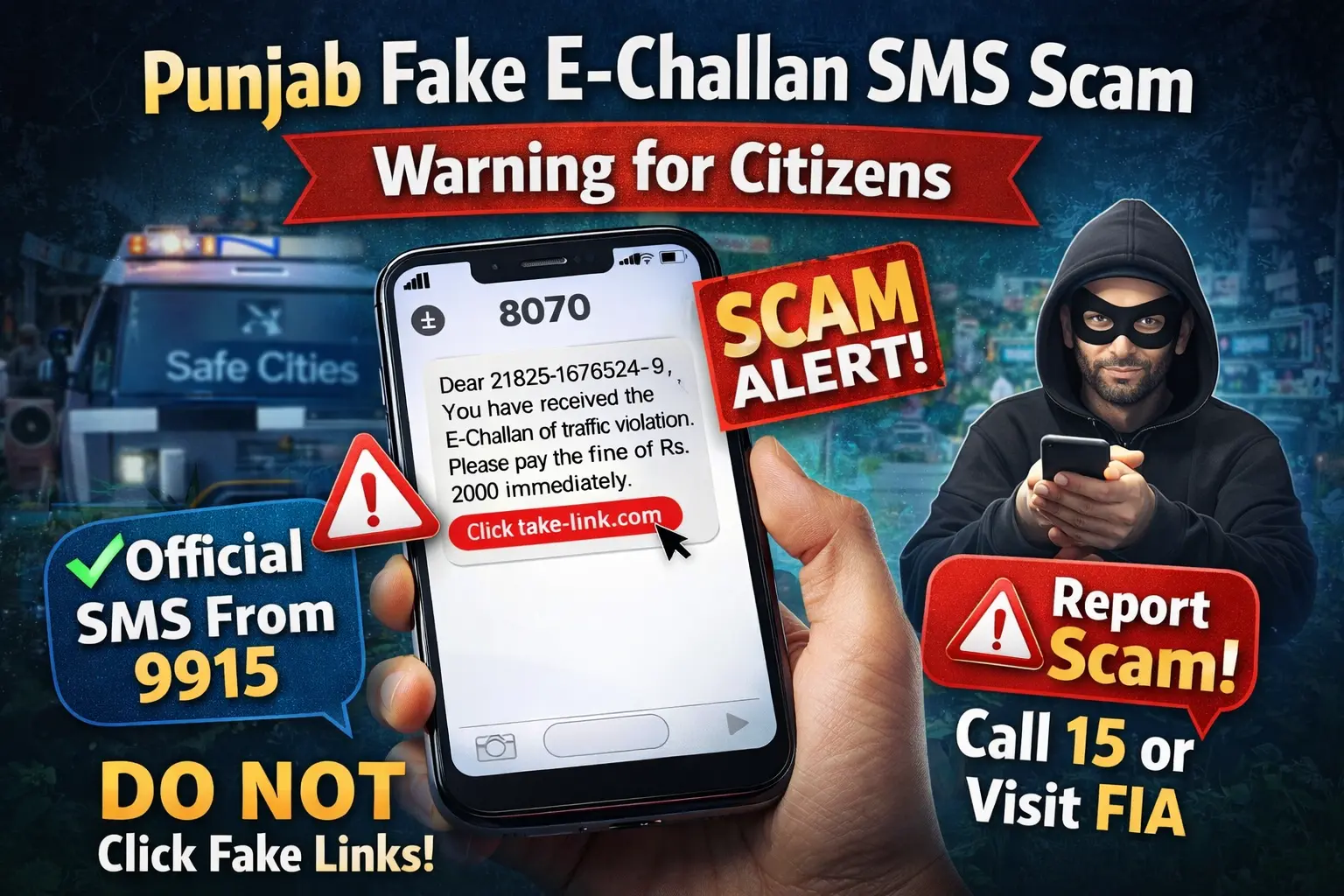
Punjab Fake E Challan SMS Scam Warning for Citizens: Complete Safety Guide 2026
The Punjab Fake E-Challan SMS Scam has recently become a serious concern for many citizens across the province. Authorities have reported multiple complaints about fraudulent SMS messages that pretend to be official traffic e-challan notifications.
These fake messages are designed to scare people into paying money or clicking dangerous links. Because of this growing problem, the Punjab Safe Cities Authority (PSCA) has issued an official warning to the public.
This article explains everything in simple and easy English, including how the scam works, how to identify fake messages, how real e-challan notifications look, and what citizens should do to stay safe.
What Is the Punjab Fake E-Challan SMS Scam?
The Punjab Fake E-Challan SMS Scam is a type of mobile phone fraud where criminals send fake traffic violation messages to citizens. These messages pretend to come from government departments such as traffic police or safe city authorities.
The goal of the scammers is to trick people into paying money or sharing personal information.
Usually, the message claims that the person has received a traffic violation ticket (e-challan) and must pay a fine immediately. The message may also include a suspicious link that directs the victim to a fake payment website.
Once someone clicks the link or shares information, the scammers may steal money, bank details, or personal data.
Because of this risk, authorities are warning everyone to stay alert and verify messages before taking any action.
How the Punjab Fake E-Challan SMS Scam Works
Scammers use simple but effective tricks to fool people. They send messages that look like official government notifications.
According to officials from the Punjab Safe Cities Authority, many of these fake messages are being sent from unauthorized numbers such as 8070.
However, official e-challan messages from the Government of Punjab are sent only from the number 9915.
Typical Steps of the Scam
Here is how the scam usually works:
- A citizen receives an SMS claiming a traffic violation.
- The message says a fine must be paid immediately.
- A link to a fake website is included in the message.
- The victim clicks the link and enters personal or payment details.
- The scammers steal the information or money.
These scams are designed to create panic and urgency, making people act quickly without verifying the message.
Important Warning from Authorities
The Punjab Safe Cities Authority (PSCA) has clearly stated that government departments never ask citizens to share sensitive financial information through SMS.
Officials Confirmed the Following
- Government agencies do not request bank details through SMS
- They never ask for debit or credit card numbers
- They do not demand immediate payment through suspicious links
- Official messages are sent only from authorized numbers
If you receive any SMS asking for cash payments, account details, or personal financial information, it is most likely a scam.
How to Identify a Real E-Challan Message
It is very important to know how a real e-challan notification looks. Genuine messages sent by the traffic authorities include complete information about the traffic violation.
A Real E-Challan SMS Usually Contains
A legitimate e-challan message typically includes:
- The date and time of the traffic violation
- The exact location where the violation occurred
- Details of the traffic offense
- A reference or challan number
- Information about how to verify the challan online
If a message does not include proper details, it may be fake.
Common Signs of a Fake E-Challan SMS
Many fake messages contain warning signs that can help you identify scams.
Red Flags to Watch For
- Message sent from unknown or suspicious numbers
- Urgent payment requests
- Links to unofficial websites
- Poor grammar or spelling mistakes
- Requests for bank account or card information
- Threats of legal action if payment is not made immediately
If you notice any of these signs, do not click the link or respond to the message.
Why Fake SMS Scams Are Increasing
Cybercrime experts say that SMS scams are increasing due to several reasons.
Main Reasons Behind the Rise
- Increased smartphone usage
- More online payments and digital services
- Lack of awareness among citizens
- Easy access to bulk SMS tools by criminals
Scammers often target people who are not familiar with official government procedures.
Because traffic challans are common, many people believe the message without verifying it.
What Citizens Should Do If They Receive a Suspicious Message
If you receive a suspicious e-challan SMS, it is important to remain calm and follow safety steps.
Steps to Take Immediately
- Do not click any links in the message.
- Do not share personal or financial information.
- Check whether the message came from the official number 9915.
- Verify the challan through the official Safe City website.
- Report the suspicious message to authorities.
Taking these steps can help prevent fraud and protect your personal information.
Where to Report Fake E-Challan Messages
Authorities encourage citizens to report scam messages immediately.
Official Reporting Channels
You can report fake messages to:
- Emergency Helpline: 15
- FIA Cyber Crime Wing
- Local police stations
- Punjab Safe Cities Authority complaint system
Reporting scams helps authorities track criminals and prevent further fraud.
Safety Tips to Avoid SMS Scams
Staying informed is the best way to protect yourself from scams.
Important Safety Guidelines
Follow these tips to stay safe:
- Always verify SMS messages before responding
- Avoid clicking links from unknown sources
- Do not share CNIC, bank, or card details
- Check challans only through official government portals
- Block suspicious phone numbers
- Educate family members about digital scams
By following these steps, citizens can avoid becoming victims of fraud.
Role of the Punjab Safe Cities Authority
The Punjab Safe Cities Authority (PSCA) plays an important role in traffic monitoring and public safety.
Responsibilities of PSCA
- Monitoring traffic violations through cameras
- Issuing digital traffic challans
- Improving road safety
- Managing safe city surveillance systems
- Protecting citizens from cyber fraud related to traffic services
The authority also runs awareness campaigns to educate the public about scams like the fake e-challan SMS fraud.
How Digital Awareness Helps Prevent Fraud
Public awareness is one of the most effective tools against cybercrime.
When citizens understand how scams work, they are less likely to fall victim to fraud.
Benefits of Awareness
- People can identify suspicious messages quickly
- Fraud attempts can be reported earlier
- Criminal networks become easier to track
- Financial losses are reduced
Government agencies encourage citizens to share awareness with friends and family.
Frequently Asked Questions (FAQs)
What is the Punjab Fake E-Challan SMS Scam?
It is a fraud where scammers send fake SMS messages claiming that the recipient has received a traffic violation ticket and must pay a fine.
Which number sends official e-challan notifications?
Official e-challan messages from the Government of Punjab are sent only from the number 9915.
What number is being used in the scam?
Many fake messages are being sent from unauthorized numbers such as 8070.
Should I click the link in an e-challan message?
No. Always verify the message through official government platforms before clicking any links.
Where can I report a fake message?
You can report suspicious SMS messages to Emergency Helpline 15 or the FIA Cyber Crime Wing.
Conclusion
The Punjab Fake E-Challan SMS Scam is a serious issue that has raised concerns among citizens. Scammers are using fake SMS messages to trick people into paying fines or sharing personal information.
Authorities have warned the public that official traffic challan messages are sent only from authorized numbers, and government departments never request bank details through SMS.
By staying alert, verifying messages, and reporting suspicious activity, citizens can protect themselves and help authorities stop these scams. Awareness and caution are the best ways to stay safe in today’s digital world.