Motorcyclists Allowed to Buy Helmets Instead of Paying Challans Complete Guide to the “Challan Nahi, Helmet” Campaign
Road safety has become a major concern in Pakistan, especially for motorcycle riders who are among the most vulnerable road users. To improve safety and reduce serious injuries in road accidents, the National Highways and Motorway Police (NHMP) has introduced a unique campaign called “Challan Nahi, Helmet.”
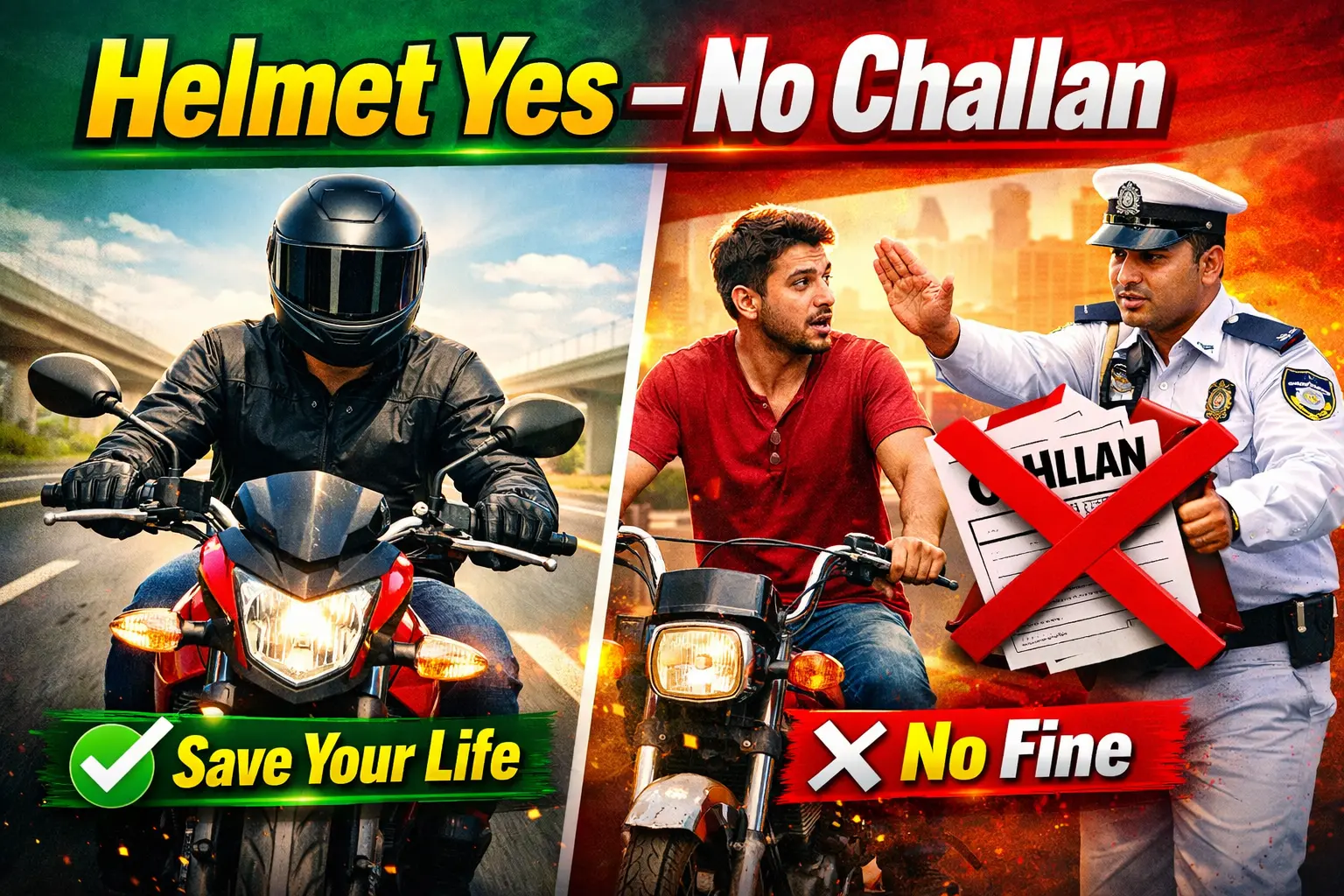
This initiative allows motorcyclists traveling without helmets to buy a helmet instead of paying a traffic challan (fine). The campaign focuses on promoting safety awareness rather than simply penalizing riders.
In this article, we will explain everything about this new campaign, how it works, its purpose, benefits, and why wearing a helmet is extremely important for motorcycle riders.
What Is the “Challan Nahi, Helmet” Campaign?
The “Challan Nahi, Helmet” campaign is a road safety initiative launched by the National Highways and Motorway Police (NHMP).
Under this program, if a motorcyclist is stopped for riding without wearing a helmet on national highways or motorways, officers do not immediately issue a challan.
Instead, the rider is given an option:
- Buy a helmet immediately
- Wear the helmet on the spot
- Avoid paying the traffic fine
If the rider agrees to purchase and wear the helmet, the challan is not issued.
However, if the rider refuses to comply or continues riding without a helmet, normal traffic penalties are applied according to the law.
This campaign focuses on encouraging safety rather than punishment.
Why the Government Launched This Campaign
Motorcycle accidents are a major cause of injuries and deaths in Pakistan. A large number of accident victims suffer severe head injuries because they are not wearing helmets.
The main goals of the campaign are:
1. Reduce Fatal Head Injuries
Head injuries are one of the leading causes of death in motorcycle accidents. Helmets provide critical protection to the brain during collisions.
2. Promote Road Safety Awareness
Many riders ignore helmet laws. This campaign spreads awareness about the importance of safety.
3. Encourage Responsible Behavior
Instead of forcing people through fines, the campaign motivates riders to make the right safety decision.
4. Immediate Safety Improvement
When a rider buys and wears a helmet on the spot, the safety benefit is immediate.
This approach ensures that the rider leaves the checkpoint safer than before.
How the “Challan Nahi, Helmet” Initiative Works
The campaign follows a simple process when a motorcyclist is caught riding without a helmet.
Step 1: Motorway Police Stop the Rider
If officers see a motorcyclist riding without a helmet on highways or motorways, they stop the rider.
Step 2: Safety Awareness
The officers explain the importance of wearing a helmet and how it protects riders during accidents.
Step 3: Option to Buy a Helmet
Instead of issuing a fine immediately, the rider is given the option to buy a helmet instead of paying the challan.
Step 4: Helmet Purchase
If the rider agrees, they are guided to purchase a helmet immediately.
Step 5: Helmet Must Be Worn
Once the helmet is purchased and worn properly, the rider is allowed to continue the journey.
Step 6: No Challan Issued
After compliance, the traffic challan is not issued.
However, riders who refuse or repeatedly violate helmet laws can face strict penalties.
Cost Comparison: Helmet vs Traffic Challan
One practical reason behind this campaign is the similar cost of helmets and traffic fines.
In many cases:
- A standard motorcycle helmet costs around the same amount as a traffic challan for not wearing one.
Instead of wasting money on fines, riders are encouraged to invest that amount in their own safety.
This makes the campaign both practical and beneficial for motorcyclists.
Statement from Motorway Police
Motorway Police spokesperson Inspector Saqib Waheed explained the purpose of this initiative.
According to him:
- The campaign is designed to protect motorcyclists from serious injuries.
- Helmets play a critical role in reducing head trauma during accidents.
- The goal is not to avoid fines but to save lives.
He also made it clear that riders who continue riding without helmets after purchasing one can still face strict legal action.
This ensures the system is not abused.
Real-Life Example from Murree Expressway
A motorcyclist traveling on the Murree Expressway shared his experience with the new campaign.
The rider was stopped by Motorway Police for riding without a helmet.
Instead of giving him a challan, the officers advised him to buy a helmet immediately.
The rider purchased the helmet on the spot and wore it. After that, he was allowed to continue his journey without paying any fine.
He later said the initiative made him realize the importance of wearing a helmet and encouraged him to prioritize safety.
Why Wearing a Helmet Is Extremely Important
Many motorcycle riders underestimate the importance of helmets. However, research and safety studies clearly show that helmets save lives.
Protection Against Head Injuries
Helmets act as a protective shield for the head during accidents.
Reduces Risk of Death
Studies show that wearing a helmet significantly lowers the chances of fatal injuries.
Absorbs Impact Energy
Helmets are designed to absorb shock and reduce the force of a collision.
Prevents Brain Damage
Without a helmet, even a minor accident can lead to serious brain injury or permanent disability.
Because of these reasons, helmet use is required by law in Pakistan.
Public Response to the Campaign
The “Challan Nahi, Helmet” campaign has received mostly positive feedback from the public.
Many people believe that encouraging safety instead of immediately imposing fines is a better strategy.
Positive Reactions
- Riders appreciate the chance to avoid fines.
- Families support the focus on safety.
- Road safety advocates say it promotes responsible behavior.
Concerns Raised by Experts
Some experts believe strict monitoring is still necessary to ensure riders do not misuse the system.
Without proper enforcement, some riders might treat the rule casually.
Preventive Policing: A New Approach
The campaign represents a shift toward preventive policing.
Traditionally, traffic enforcement focused mainly on penalties and fines.
However, preventive policing focuses on:
- Education
- Awareness
- Behavior change
- Long-term safety
Many countries use similar strategies where authorities prioritize compliance over punishment.
If implemented consistently, this campaign could help reduce motorcycle accident injuries significantly.
Road Safety Challenges in Pakistan
Pakistan has millions of motorcycles on the roads. For many families, motorcycles are the primary mode of transportation.
However, several issues increase road safety risks:
- Riders ignoring helmet laws
- Lack of safety awareness
- Poor driving behavior
- High traffic congestion
Because motorcycles offer little physical protection, riders are at higher risk in accidents.
This makes helmet use extremely important.
Future Impact of the Campaign
If the campaign continues successfully, it can bring several long-term benefits.
Safer Highways
More riders wearing helmets will reduce injuries and fatalities.
Increased Safety Awareness
People will start seeing helmets as a necessity, not an option.
Positive Law Enforcement Image
The public may develop more trust in traffic police when enforcement focuses on safety.
Reduction in Medical Costs
Fewer serious injuries can reduce healthcare expenses for families and the government.
Conclusion
The “Challan Nahi, Helmet” campaign launched by the National Highways and Motorway Police is an innovative step toward improving road safety in Pakistan.
By allowing motorcyclists to buy helmets instead of paying challans, the campaign encourages responsible behavior while protecting riders from serious injuries.
This initiative highlights a balanced approach where education, awareness, and enforcement work together.
With increasing motorcycle usage and rising accident risks, campaigns like this are essential to promote safer roads. If riders cooperate and authorities enforce the program properly, it can save many lives and make highways safer for everyone.