
Govt Decides to Maintain Over Rs. 100 Levy on Petrol in Pakistan 2026 Full Update
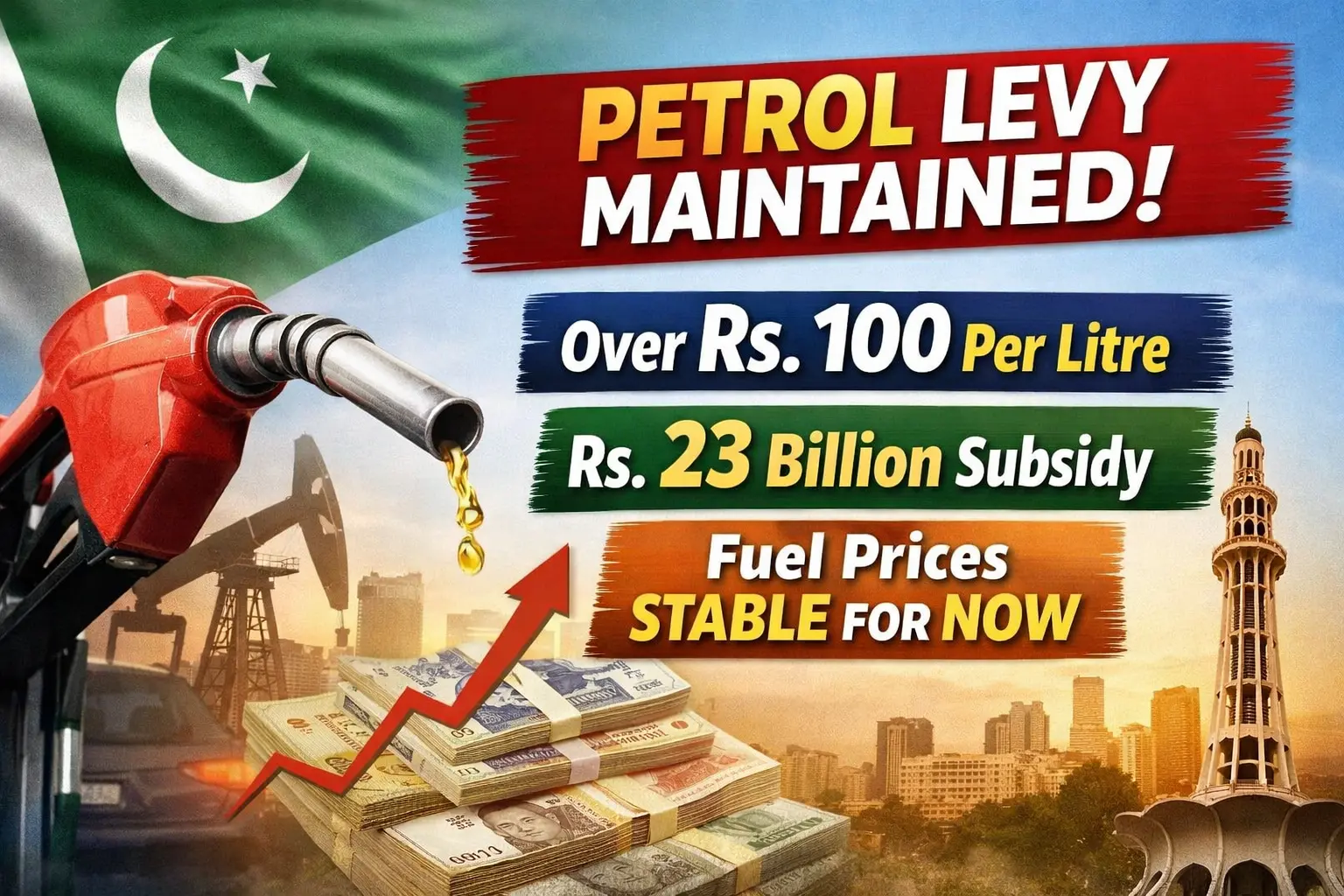
The Government of Pakistan has decided to maintain a petroleum levy of over Rs. 100 on petrol for 2026. This decision keeps petrol and diesel prices temporarily stable, offering relief to consumers and businesses amid global oil price concerns. In this article, we explain everything in simple English about this levy, fuel prices, subsidies, and its impact on Pakistan’s economy.
Current Petrol and Diesel Prices in Pakistan
The latest government notification confirms that petrol and diesel prices remain unchanged during the current review period.
| Fuel Type | Current Price (Per Litre) | Petroleum Levy |
|---|---|---|
| Petrol | Rs. 321.17 | Rs. 105.37 |
| Diesel | Rs. 335.86 | Rs. 55.24 |
These prices will remain effective until the next petroleum price review, which occurs approximately every 15 days in Pakistan.
Key Highlights:
- Petrol levy remains over Rs. 100 per litre
- Diesel levy remains above Rs. 55 per litre
- Fuel prices are temporarily stable for consumers
This move is part of the government’s strategy to stabilize fuel prices while ensuring revenue collection.
Why the Government Maintained the Petrol Levy
The petroleum levy is a significant source of government revenue. Maintaining it helps Pakistan meet fiscal goals and supports economic stability.
Main Reasons Behind the Decision
1. Government Revenue Generation
The petroleum levy contributes billions of rupees to Pakistan’s federal budget. Reducing or removing it could increase the fiscal deficit and affect government spending.
2. IMF Commitments
Pakistan has agreed to certain revenue targets under IMF programs. The levy helps the country meet these obligations without reducing essential government projects.
3. Managing Fuel Price Stability
Instead of immediately increasing fuel prices, the government uses temporary subsidies to stabilize the market, preventing sudden shocks for consumers.
4. Budgetary Planning
Revenue from the levy funds development programs, infrastructure projects, and other government initiatives.
Government Subsidy to Stabilize Fuel Prices
To keep petrol and diesel prices unchanged, the government announced a Rs. 23 billion subsidy effective from March 14 to March 20, 2026.
Subsidy Breakdown
| Fuel | Subsidy Per Litre |
|---|---|
| Petrol | Rs. 49.63 |
| Diesel | Rs. 75.05 |
This subsidy compensates oil marketing companies (OMCs) through price differential claims, ensuring that consumers continue paying stable prices while companies recover their costs.
How the Subsidy Works
- The government calculates the difference between actual fuel cost and consumer price.
- Oil companies submit claims to recover the price difference.
- Authorities verify the claims for accuracy.
- Funds are released through the Oil and Gas Regulatory Authority (OGRA).
This process ensures transparency and prevents financial losses for oil companies while keeping consumer prices stable.
Role of OGRA in Fuel Price Adjustments
The Oil and Gas Regulatory Authority (OGRA) is responsible for monitoring and regulating petroleum prices in Pakistan.
Responsibilities of OGRA
- Reviewing petroleum price proposals
- Verifying price differential claims submitted by oil companies
- Auditing subsidy payments
- Monitoring oil marketing companies for compliance
OGRA ensures that subsidies are distributed properly and that consumers are charged fair prices at fuel stations.
Establishment of the Prime Minister’s Austerity Fund
Alongside the fuel subsidy, the government approved the creation of the Prime Minister’s Austerity Fund to support economic stability and manage government expenditures.
Budget Allocation
- Total Fund: Rs. 27.1 billion
- Fuel Subsidy Payments: Rs. 23 billion
- Remaining Funds: Used for other austerity initiatives
The subsidy amount is transferred to OGRA for distribution to oil companies.
Impact of Petrol Levy on the Economy
The petroleum levy directly affects Pakistan’s economy, consumers, and businesses.
1. Impact on Transportation
Higher fuel costs increase transportation expenses, leading to:
- Higher logistics costs
- Increased public transport fares
- Rising delivery charges for goods
2. Inflationary Pressure
Fuel prices influence the cost of goods and services such as:
- Food items
- Manufacturing and industrial products
- Construction materials
This can contribute to general inflation across sectors.
3. Government Fiscal Stability
Although the levy is sometimes criticized, it helps the government:
- Maintain revenue streams
- Reduce reliance on borrowing
- Fund development budgets
How Petrol Prices Are Determined in Pakistan
Petrol prices are calculated using a complex formula that includes:
| Price Component | Description |
|---|---|
| International Oil Prices | Global crude oil rates |
| Exchange Rate | PKR vs USD value |
| Petroleum Levy | Government tax |
| Dealer Commission | Retailer profit margin |
| Distribution Cost | Transportation and logistics |
These factors combine to determine the final price consumers pay at petrol pumps.
Future Outlook for Petrol Prices in 2026
Fuel prices in Pakistan may change based on global and domestic factors.
Possible Scenarios
- If global oil prices rise: Petrol prices may increase during future reviews.
- If the rupee strengthens: Fuel imports could become cheaper, possibly lowering prices.
- If the government adjusts the levy: Changes in petroleum levy directly impact consumer fuel costs.
Experts predict that petrol price fluctuations will continue throughout 2026 due to global market uncertainties.
What This Means for Pakistani Consumers
Consumers can expect temporary price stability, but long-term costs depend on:
- Global oil market trends
- Government fiscal policies
- Exchange rate fluctuations
- Energy sector reforms
Periodic price adjustments are normal under Pakistan’s petroleum pricing system.
Tips to Reduce Fuel Expenses
Consumers can adopt simple strategies to save on fuel:
- Maintain proper vehicle tire pressure
- Avoid unnecessary idling
- Use carpooling whenever possible
- Choose fuel-efficient vehicles
- Plan trips to reduce travel distance
These small changes can significantly reduce monthly fuel costs.
FAQs
Q1: Why did the government keep the petrol levy above Rs.100?
A: To generate stable revenue, meet fiscal targets, and provide temporary consumer relief through subsidies.
Q2: What is the current petrol price in Pakistan?
A: Rs. 321.17 per litre; diesel is Rs. 335.86 per litre.
Q3: How much subsidy is the government providing on fuel?
A: Rs. 23 billion for the current review period.
Q4: Who verifies fuel subsidy payments?
A: The Oil and Gas Regulatory Authority (OGRA) audits all claims before releasing funds.
Conclusion
The Government of Pakistan’s decision to maintain a petrol levy above Rs. 100 is a careful balance between economic stability and consumer relief. By providing a Rs. 23 billion subsidy, the government has temporarily kept petrol and diesel prices stable. Consumers enjoy short-term relief, while the government ensures continuous revenue generation for development and fiscal stability.
Disclaimer:
This article is for informational purposes only. Prices, subsidies, and government policies are subject to change. Readers should always check official notifications and verified sources for the most current information.