Pakistan and IMF Fail to Reach Staff Level Agreement: Economic Outlook 2026
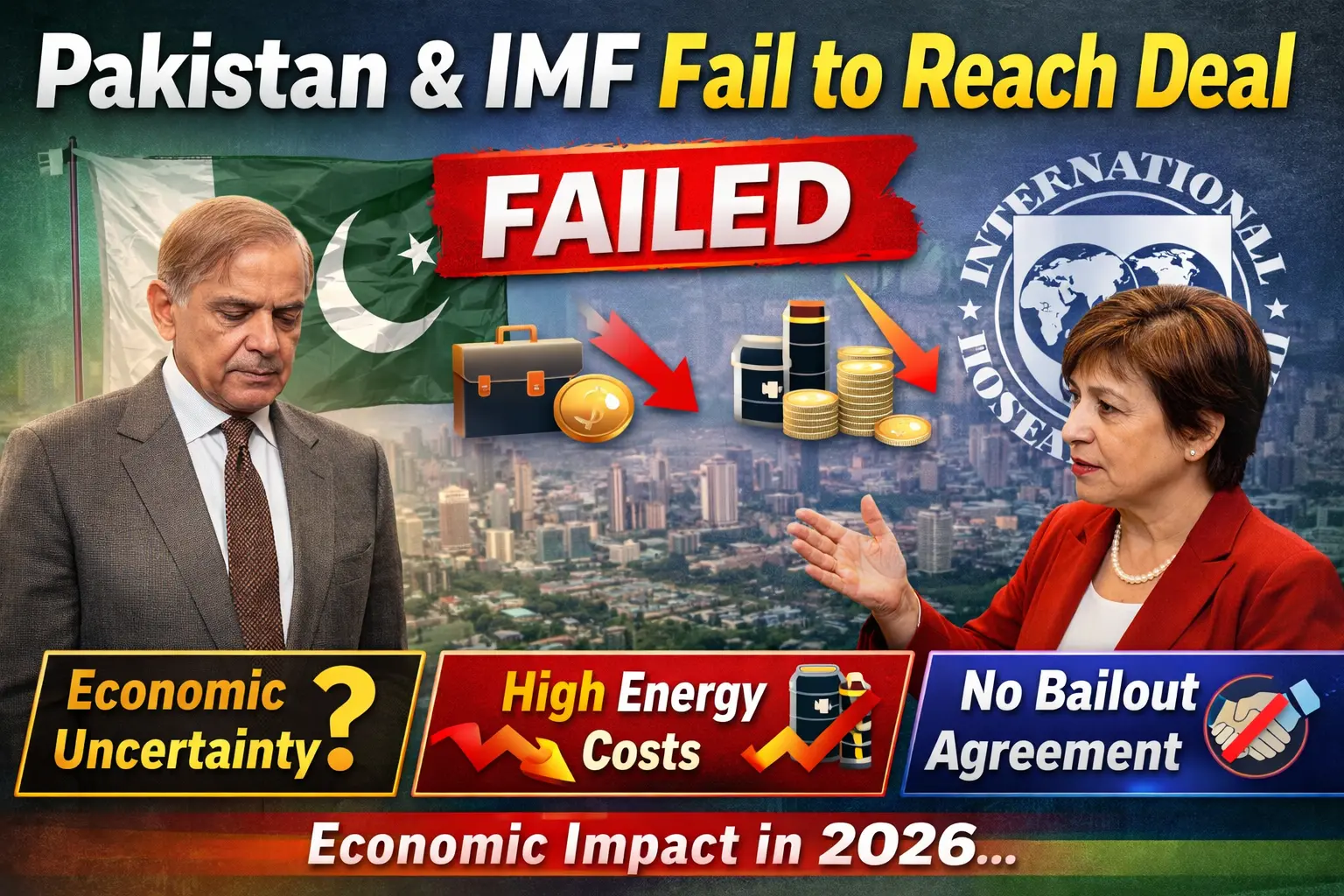
Pakistan and the International Monetary Fund (IMF) recently held important negotiations regarding the country’s ongoing bailout program. However, the two sides did not reach a staff-level agreement during the latest review meeting. This situation has created concern among economists, investors, and citizens about Pakistan’s economic outlook for 2026.
Although discussions between Pakistan and the IMF made progress, several economic and global uncertainties prevented both sides from finalizing the agreement within the scheduled timeline. The negotiations are still ongoing, and both parties are expected to continue discussions in the coming weeks.
Understanding the importance of this development is crucial because IMF agreements strongly influence Pakistan’s inflation, fiscal policies, energy reforms, foreign reserves, and investor confidence.
Pakistan and IMF Talks: What Happened?
Pakistan and the IMF were conducting the third review of the Extended Fund Facility (EFF) and the second review of the Resilience and Sustainability Facility (RSF).
The IMF delegation was led by Iva Petrova, who held meetings with Pakistani officials in Islamabad, Karachi, and through virtual sessions. These discussions took place between February 25 and March 11, 2026.
The purpose of these meetings was to evaluate Pakistan’s progress in implementing economic reforms required under the IMF program.
Although both sides reported progress in several policy areas, they were unable to reach a staff-level agreement during this review. Instead, the talks will continue while both sides assess the impact of global economic developments.
Key Institutions Involved in the Negotiations
Several major institutions are involved in the IMF negotiations and economic reforms.
| Entity | Role |
|---|---|
| International Monetary Fund (IMF) | Global financial institution reviewing Pakistan’s bailout program |
| Government of Pakistan | Negotiating economic reforms and fiscal policies |
| State Bank of Pakistan (SBP) | Managing inflation and monetary policy |
| Ministry of Finance | Responsible for fiscal reforms and government budgeting |
These institutions work together to stabilize Pakistan’s economy and ensure that the country meets the targets set under the IMF program.
Why the Staff-Level Agreement Was Delayed
There are several reasons why Pakistan and the IMF could not finalize the agreement during the recent review.
Global Geopolitical Uncertainty
One of the biggest concerns is the ongoing geopolitical tensions in the Middle East. These conflicts have created uncertainty in global markets, especially in the energy sector.
Pakistan relies heavily on imported oil and gas. Any disruption in global supply can significantly affect the country’s economic stability.
Unpredictable Oil Prices
Oil prices are currently very volatile in international markets. When oil prices increase, Pakistan’s import bill also rises.
Higher oil prices can lead to several economic challenges, including:
- Increased inflation
- A higher trade deficit
- Greater pressure on foreign exchange reserves
Because Pakistan imports a large amount of fuel, sudden changes in oil prices make economic planning more difficult.
Uncertain Export Outlook
Another factor affecting the negotiations is the uncertainty in global trade routes.
Experts are concerned that instability near the Strait of Hormuz, one of the world’s most important oil shipping routes, could disrupt international trade.
If shipping routes are affected, Pakistan’s exports and supply chains may face delays and higher costs.
Key Areas Discussed During IMF Negotiations
The IMF discussions focused on several major economic reforms that Pakistan must continue implementing.
Fiscal Consolidation
One of the main goals of the IMF program is fiscal consolidation. This means reducing the government’s budget deficit.
Pakistan plans to achieve this by:
- Increasing tax collection
- Expanding the tax base
- Reducing unnecessary government spending
Stronger public finances are necessary for long-term economic stability.
Monetary Policy and Inflation Control
Controlling inflation remains one of the biggest economic challenges in Pakistan.
The State Bank of Pakistan (SBP) is maintaining a strict monetary policy to keep inflation within manageable levels.
Higher interest rates can help reduce inflation, but they may also slow economic growth in the short term.
Energy Sector Reforms
Pakistan’s energy sector faces several long-standing problems, including:
- Rising circular debt
- High electricity tariffs
- Inefficient power distribution
The IMF has encouraged Pakistan to implement reforms that improve the financial health of the energy sector.
These reforms may include improving billing systems, reducing power losses, and increasing efficiency in electricity distribution.
Structural Economic Reforms
Structural reforms are long-term changes designed to strengthen the economy.
Key reform priorities include:
- Expanding the tax base
- Improving governance and transparency
- Encouraging private sector investment
- Strengthening social protection programs
These reforms aim to create sustainable economic growth and reduce Pakistan’s reliance on foreign loans.
Pakistan’s IMF Program Explained
Pakistan is currently participating in the Extended Fund Facility (EFF) program provided by the IMF.
Overview of the IMF Program
| Program | Details |
|---|---|
| Program Name | Extended Fund Facility (EFF) |
| Duration | 37 months |
| Objective | Stabilize Pakistan’s economy |
| Key Focus | Fiscal reforms, inflation control, and energy sector restructuring |
In addition to the EFF program, Pakistan is also participating in the Resilience and Sustainability Facility (RSF).
This facility focuses on supporting climate resilience projects and sustainable development initiatives.
Economic Risks Pakistan Faces in 2026
Pakistan’s economy is currently facing several internal and external risks.
Rising Energy Costs
Pakistan imports a large portion of its energy needs. If global oil prices continue to rise, the country will need to spend more foreign currency on energy imports.
This could increase pressure on Pakistan’s foreign exchange reserves.
External Financing Needs
Pakistan requires significant financial support from international institutions to maintain economic stability.
Without IMF support, it becomes more difficult for Pakistan to secure loans from other lenders such as:
- The World Bank
- The Asian Development Bank
- Other international financial institutions
IMF agreements often act as a signal of economic credibility.
Trade Balance Pressure
Pakistan’s trade balance remains a major concern.
The country imports more goods than it exports, which creates a trade deficit.
To reduce this deficit, Pakistan must increase exports and diversify its export industries.
Impact of IMF Negotiations on Pakistan’s Economy
Many people wonder why IMF negotiations are so important.
Here are some key economic impacts.
Foreign Exchange Stability
When Pakistan reaches an agreement with the IMF, it often unlocks financial assistance from other global institutions.
This helps stabilize Pakistan’s foreign exchange reserves and improves the country’s ability to pay for imports.
Investor Confidence
IMF agreements increase confidence among international investors.
When investors see that Pakistan is implementing economic reforms, they are more likely to invest in the country’s economy.
Inflation and Interest Rates
IMF programs often require strict economic policies.
While these policies may keep interest rates high in the short term, they help control inflation over time.
What Happens Next in Pakistan-IMF Talks?
Although the latest review did not produce a staff-level agreement, discussions between Pakistan and the IMF are continuing.
Both sides acknowledged that progress had been made during the negotiations. However, they decided to wait until global economic conditions become clearer before finalizing the agreement.
If the negotiations succeed in the coming weeks, Pakistan may receive the next tranche of funding under the IMF bailout program.
Key Economic Indicators Under Review
During IMF discussions, several economic indicators are carefully evaluated.
| Indicator | Importance |
|---|---|
| Inflation Rate | Shows changes in the cost of living |
| Fiscal Deficit | Measures the gap between government spending and revenue |
| Current Account Balance | Indicates trade and financial flows |
| Foreign Exchange Reserves | Shows the country’s ability to pay for imports and external debt |
These indicators help determine whether Pakistan is meeting the targets set under the IMF program.
Long-Term Reforms Needed for Economic Stability
Economic experts believe Pakistan must continue major reforms to avoid repeated financial crises.
Improving the Tax System
Pakistan’s tax-to-GDP ratio is lower than many developing countries. Improving tax collection is essential for increasing government revenue.
Energy Sector Efficiency
Reducing electricity losses and improving energy management can help lower power costs and reduce financial pressure on the government.
Export Diversification
Pakistan needs to expand exports beyond traditional sectors such as textiles.
Industries like technology, IT services, and manufacturing could create new opportunities for economic growth.
Social Protection Programs
Economic reforms must also protect vulnerable communities.
Programs supporting education, healthcare, and low-income families are important for maintaining social stability.
FAQs
Why did Pakistan and the IMF fail to reach a staff-level agreement?
The agreement was delayed mainly because of global economic uncertainty, rising energy prices, and geopolitical tensions affecting economic projections.
What is the IMF Extended Fund Facility?
The Extended Fund Facility (EFF) is a financial assistance program that provides long-term loans to countries facing serious economic challenges.
Will Pakistan still receive IMF funding?
Negotiations are still ongoing. If Pakistan successfully meets the IMF requirements, it may receive the next installment of financial assistance.
How do IMF programs affect Pakistan’s economy?
IMF programs influence fiscal policies, inflation control, structural reforms, and investor confidence in the economy.
Conclusion
Although Pakistan and the IMF did not reach a staff-level agreement during the latest review, this does not mean the negotiations have failed. Both sides have made progress and discussions will continue in the coming weeks.
The outcome of these talks will play a crucial role in shaping Pakistan’s economic stability, inflation control, and financial outlook for 2026. With continued reforms and international cooperation, Pakistan aims to strengthen its economy and ensure long-term financial stability.