
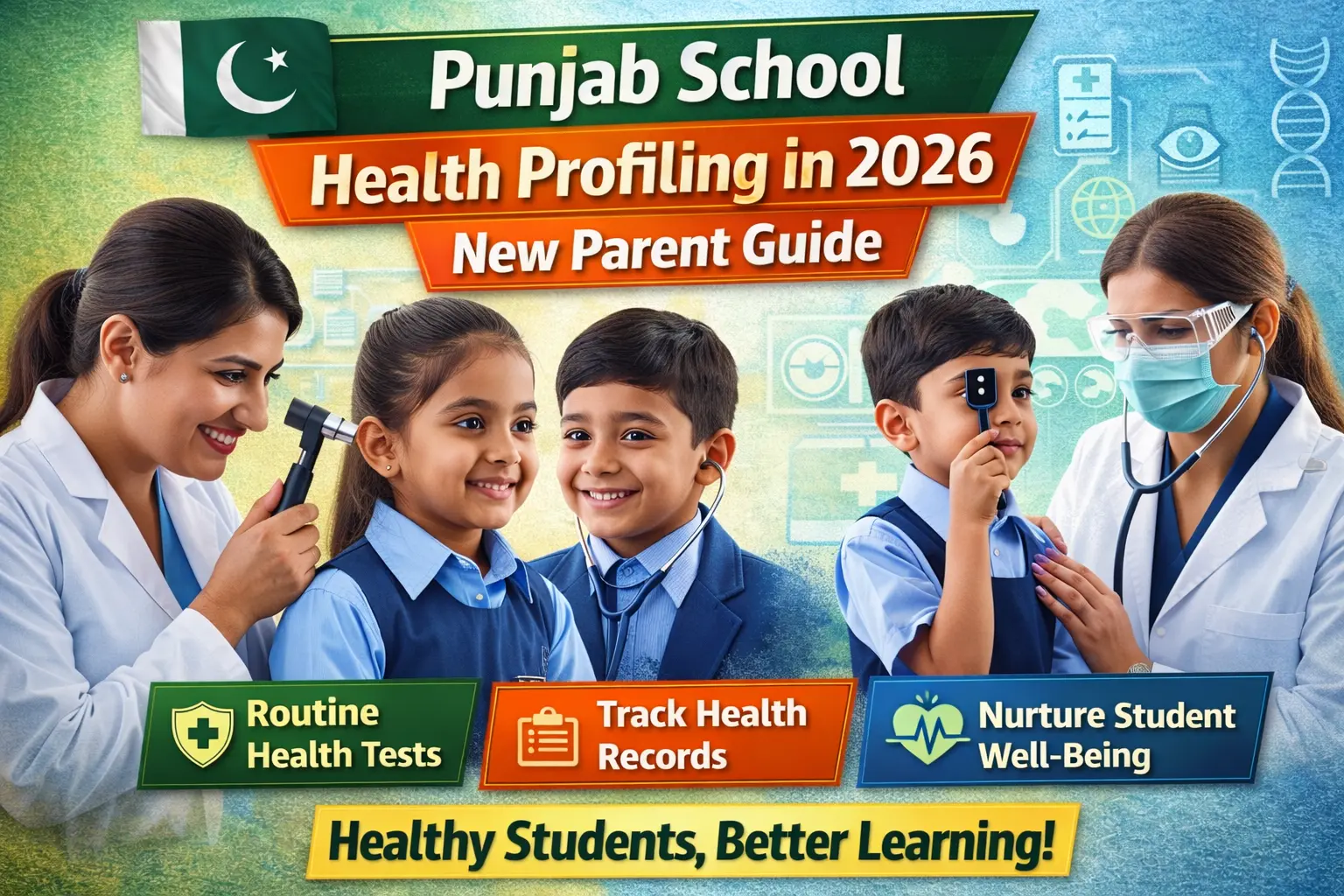
Punjab School Launch Health Profiling in 2026: Complete Parent Guide
The Punjab School Launch Health Profiling in 2026 initiative is a landmark program aimed at improving the health and well-being of students in public schools. The initiative introduces structured health records and routine screenings for early detection of health issues, ensuring students can thrive academically and physically. This guide explains the program in simple English for parents, teachers, and students.
What Is Punjab School Health Profiling 2026?
The Punjab School Health Profiling 2026 is an official government initiative by the School Education Department Punjab. The main objective is to monitor the health of students in public schools and create a digital health record system.
Key Objectives:
- Monitor student health regularly.
- Detect common health problems early.
- Maintain digital health records for every student.
- Promote better learning and attendance by addressing health issues.
This program focuses on common problems such as:
- Vision difficulties
- Hearing issues
- Dental health problems
- Nutritional deficiencies
- Growth irregularities
By tracking these indicators, schools can provide support before health issues affect academic performance.
Why Punjab Introduced Health Profiling in Schools
Health and academic performance are closely linked. Students facing untreated health problems often struggle with concentration and participation in class. The Punjab School Health Profiling 2026 initiative addresses these issues.
Main Reasons Behind the Program
- Early Detection of Health Problems
Routine screenings help identify issues like poor eyesight or malnutrition at an early stage. - Improved Student Attendance
Early treatment reduces absenteeism caused by preventable illnesses. - Data-Based Health Planning
The digital health database helps authorities understand health trends across districts. - Better Learning Environment
Healthy students are more focused, active, and engaged in school activities.
This program bridges education policy with preventive healthcare, making schools a key part of public health improvement.
Health Screening Tests Included in the Program
The Punjab School Health Profiling system includes basic medical screenings conducted by trained health staff within school premises.
1. Vision Test
Detects problems such as weak eyesight or blurred vision. Early identification ensures students receive proper treatment.
2. Hearing Assessment
Screening identifies hearing issues that could affect classroom learning and communication.
3. Dental Checkup
Catches cavities, gum issues, and other oral health concerns to support overall well-being.
4. Height and Weight Measurement
Calculates Body Mass Index (BMI) to identify underweight or overweight students.
5. Nutrition Evaluation
Checks for signs of malnutrition and provides guidance for nutritional support.
These screenings are simple, safe, and designed to identify potential issues before they become serious.
Mental Health Support for Students
The initiative also emphasizes mental health awareness. Many students face academic and social pressures, making early detection of stress, anxiety, or learning difficulties crucial.
How Schools Will Support Mental Health
- Teachers receive training to spot behavioral changes.
- Counseling referrals may be offered to students in need.
- Schools promote emotional well-being awareness programs.
This ensures students receive holistic support for both physical and psychological development.
Digital Health ID for Every Student
A key feature of the program is the Digital Health ID system. Every student receives a unique health profile in a secure digital database, which includes screening results and updates.
What Parents Can Access
- Medical screening reports
- Growth tracking information
- Health recommendations
- Referral notices for further treatment
This digital system ensures transparency and allows parents to stay informed about their child’s health.
How the Health Profiling System Will Work
The implementation of the Punjab School Health Profiling 2026 initiative follows a structured process coordinated by education authorities and health professionals.
Step-by-Step Process:
- Guidelines Issued: School Education Department provides protocols to schools.
- Coordination: District authorities manage schedules and logistics.
- Health Screening: Medical teams visit schools to conduct tests.
- Recording Results: Screening data is added to the digital system.
- Parent Notifications: Parents are informed if health issues are detected.
- Medical Referrals: Students needing further care are referred to hospitals.
This ensures proper health checks without disrupting regular school activities.
Nutrition Support and School Meal Programs
In certain districts, the initiative links with nutrition programs to support students identified with deficiencies.
Nutrition Support Includes:
- Free milk distribution
- Fortified snacks
- Dietary recommendations
- Nutrition awareness programs
These measures ensure children get adequate nutrition for healthy growth and better learning.
Benefits for Parents, Students, and Teachers
Benefits for Students:
- Early detection of health problems
- Better physical development monitoring
- Improved focus in classrooms
- Access to medical referrals
Benefits for Parents:
- Regular updates on their child’s health
- Access to screening reports
- Guidance on treatment if needed
Benefits for Teachers:
- Understanding student health conditions
- Ability to support students with special health needs
- Improved classroom performance and attendance
By combining health and education systems, schools create a more effective learning environment.
Eligibility Criteria for the Health Profiling Program
The program primarily targets students enrolled in public schools across Punjab.
Basic Requirements:
- Must be enrolled in a government school in Punjab.
- School records must be updated.
- Participation in scheduled screenings.
- Parental consent may be required.
Schools handle most administrative tasks to make the process easy for parents.
Role of Teachers in the Health Profiling Program
Teachers are vital for detecting early signs of health issues.
Responsibilities:
- Observing signs of illness or fatigue
- Identifying potential learning difficulties
- Reporting health concerns to school administration
- Supporting students during screenings
Teacher training ensures early identification of malnutrition, vision problems, and emotional stress.
Official Contact and Helpline Information
Parents and school administrators can access official updates through the School Education Department Punjab.
Official Sources:
- Website: schools.punjab.gov.pk
- District Education Offices
- School administration offices
- Official helpline numbers listed on portals
Always rely on official sources to avoid misinformation.
FAQs
Q1: What is Punjab School Health Profiling 2026?
A: It is a government program that introduces health screenings and digital records in public schools across Punjab.
Q2: Are health screenings mandatory for students?
A: Most public schools will conduct screenings with parental consent.
Q3: What medical tests are included?
A: Vision tests, hearing assessments, dental checks, height/weight measurements, and nutrition evaluations.
Q4: Can parents access reports?
A: Yes, through digital portals or mobile applications.
Q5: Is treatment provided if health issues are detected?
A: Students may be referred to public hospitals for further care if necessary.
Conclusion
The Punjab School Launch Health Profiling 2026 initiative is a major step towards healthier students and improved educational outcomes. With regular screenings, mental health support, nutrition programs, and digital health records, the government ensures early detection of health problems, better learning conditions, and empowered parents. This program sets a new benchmark for integrating education with preventive healthcare in Punjab.