
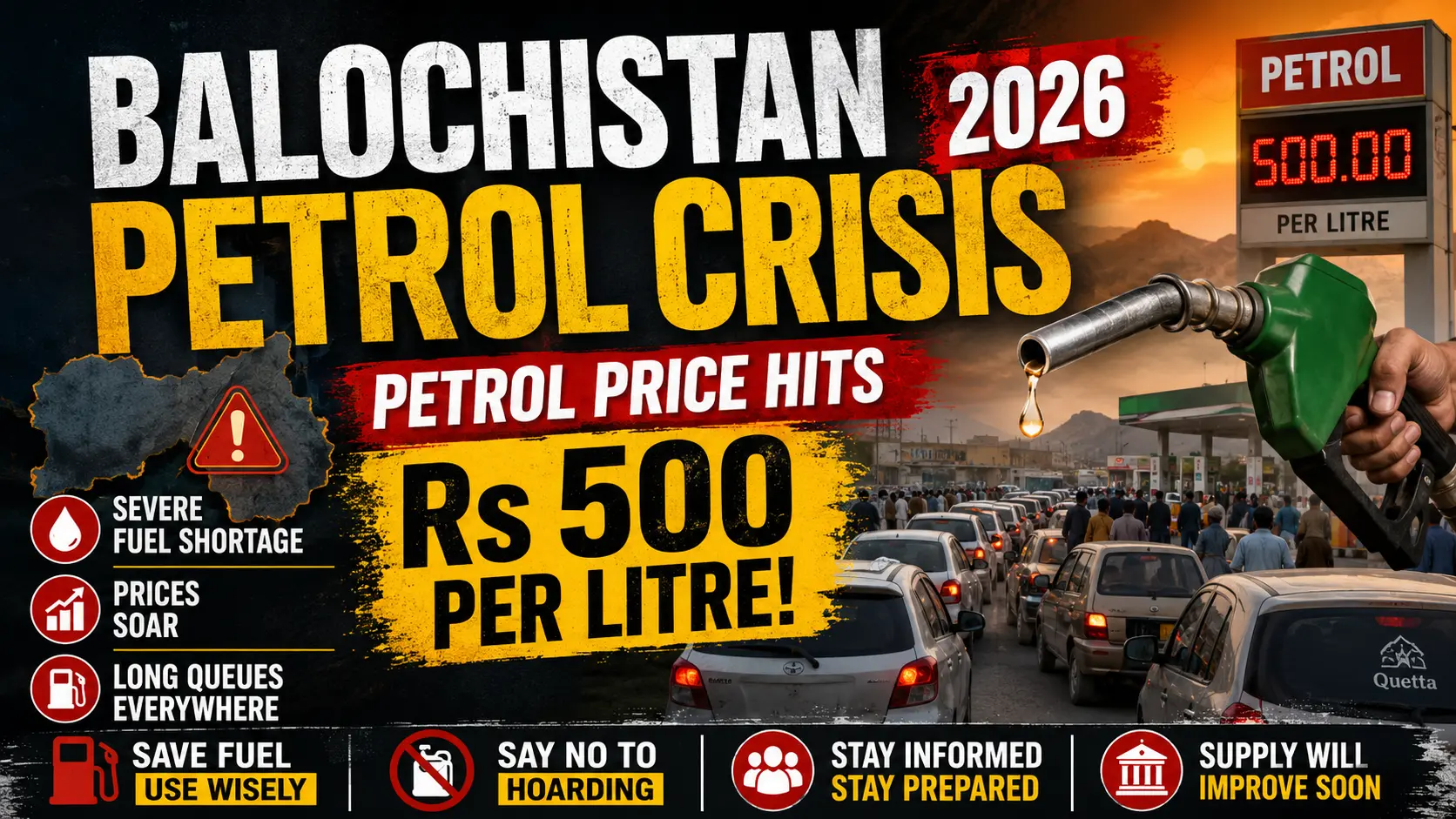
Petrol Crisis 2026: Petrol Price Reaches Rs 500 Per Litre
Overview of the Fuel Crisis in Balochistan
A serious fuel shortage has hit several districts of Balochistan, creating one of the most difficult situations for transport and daily life in recent years. Petrol has become extremely expensive in many areas, with reports showing prices reaching up to Rs 500 per litre in some locations.
This situation has developed due to disrupted fuel supply chains, limited availability at petrol stations, and rising demand from the public. As a result, normal daily activities such as commuting, business transport, and public services have been heavily affected across the province.
Petrol Prices Rise to Record Levels
Sharp Increase in Fuel Costs
The most alarming part of the crisis is the sudden rise in petrol prices. In districts like Nushki, Kharan, and Loralai, fuel sellers are charging much higher rates compared to official prices. In some cases, petrol is being sold at Rs 500 per litre.
This is far above the usual market rate in Pakistan, where prices are regulated and adjusted through government policies. However, due to shortages, unofficial fuel sellers and limited supply stations are charging extreme rates.
Demand Versus Supply Gap
The main reason behind this price surge is the imbalance between supply and demand. When fuel becomes scarce, people rush to buy it, which increases pressure on already limited stocks. This creates a cycle where prices keep rising as availability decreases.
Causes of the Petrol Shortage in Balochistan
Disruption in Supply Chain
One of the key reasons behind the crisis is disruption in fuel supply routes. Transportation of petroleum products has been affected, reducing the regular flow of petrol into many districts.
Reduction in Cross Border Fuel Flow
Officials have also pointed out that a reduction in fuel coming through informal and cross border channels has added pressure on the official supply system. Many areas in Balochistan have historically depended on such sources to meet local demand.
When these channels slow down or stop, the official supply network struggles to fill the gap immediately.
Panic Buying by Consumers
Another important factor is panic buying. As news of shortages spreads, people start storing fuel in containers or filling their vehicles repeatedly. This increases pressure on petrol stations and speeds up stock depletion.
Quetta Faces Severe Petrol Shortage
Long Queues at Petrol Stations
The provincial capital Quetta is also heavily affected. Many petrol stations have either closed temporarily or run out of fuel within hours of opening. Those that are still operating are witnessing long queues of vehicles stretching for several kilometres.
Drivers often wait for hours, only to find out that fuel is no longer available when their turn arrives.
Impact on Daily Commuting
Public transport in Quetta has been disrupted as buses, taxis, and ride services struggle to operate normally. Many people are unable to reach work, schools, or hospitals on time due to fuel shortages.
Impact on Transportation and Daily Life
Rising Travel Costs
Transport operators are increasing fares due to higher fuel costs and limited supply. This has made daily travel more expensive for ordinary citizens.
Business Disruptions
Businesses that rely on transportation, such as delivery services and logistics companies, are also facing difficulties. Delays in goods transport are affecting supply chains and increasing operational costs.
Effect on Essential Services
Healthcare and emergency services are also under pressure. Ambulances and mobile services may face delays due to limited fuel availability, which can create serious risks in urgent situations.
Government Response to the Crisis
Efforts to Increase Fuel Supply
Authorities have acknowledged the seriousness of the situation and are working to improve fuel supply in affected regions. Additional fuel shipments are being arranged from other parts of the country to stabilize the market.
Distribution from Other Cities
Fuel is being redirected from major supply points to Balochistan in an effort to reduce shortages. Officials are trying to ensure that petrol stations receive consistent supplies in the coming days.
Monitoring and Control Measures
Government teams are also monitoring petrol stations to prevent illegal hoarding and unfair price increases. Action is expected against those involved in overpricing fuel during the shortage.
Market Outlook and Expected Improvement
Gradual Stabilization Expected
Experts believe that the situation may improve gradually if supply chains remain stable. Once fuel deliveries become consistent again, petrol availability at stations is expected to increase.
Uncertainty in Remote Areas
However, remote districts may continue to face difficulties due to transportation delays and logistical challenges. These areas often receive fuel later than major cities, which can slow recovery.
Economic Impact of Rising Petrol Prices
Inflation Pressure
Higher petrol prices directly increase transportation costs, which leads to higher prices for food, goods, and essential services. This creates inflation pressure across the region.
Strain on Small Businesses
Small businesses are particularly affected because they have limited ability to absorb rising costs. Many may be forced to increase prices or reduce operations.
Reduced Economic Activity
When fuel becomes expensive and difficult to find, overall economic activity slows down. People travel less, businesses operate at reduced capacity, and productivity drops.
Public Reaction and Growing Concerns
Frustration Among Citizens
Residents across Balochistan have expressed frustration over the situation. Many are struggling to manage daily travel and are worried about further price increases.
Social Media Response
Social media platforms are filled with posts showing long queues and empty petrol stations. Citizens are demanding quick action from authorities to restore normal fuel supply.
Demand for Long Term Solutions
People are also calling for long term solutions to prevent similar crises in the future. They want stronger supply systems and better fuel management policies.
Will Petrol Prices Come Down
Possible Price Stabilization
If fuel supply improves, petrol prices are expected to gradually return to normal levels. Increased availability will reduce pressure on demand and help stabilize the market.
Dependence on Supply Chains
The recovery depends mainly on how quickly supply chains are restored. Consistent fuel deliveries will be the key factor in bringing prices back under control.
Conclusion
The petrol crisis in Balochistan has created a serious challenge for both citizens and authorities. With petrol prices reaching up to Rs 500 per litre in some areas, daily life has been heavily disrupted.
Transport systems, businesses, and essential services are all affected by the shortage. Although government efforts are underway to restore supply, the situation remains uncertain in many regions.
Stability in fuel distribution and effective management will be necessary to prevent similar crises in the future and ensure that citizens have reliable access to petrol at affordable prices.
Disclaimer
This article is based on publicly reported information and is intended for general awareness only. Prices and conditions may change over time, and readers should verify details from official sources before making any decisions.