
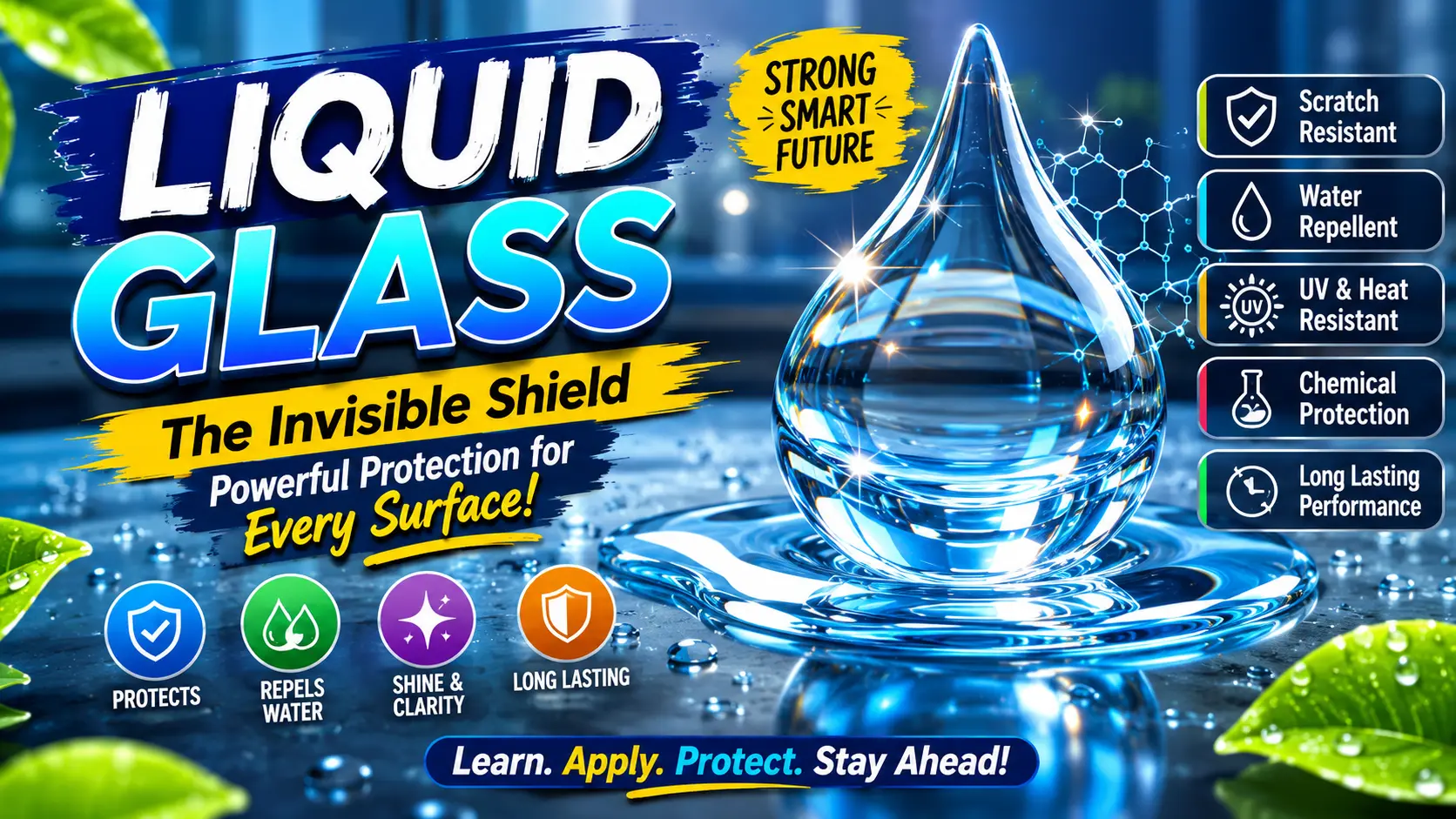
Liquid Glass: Complete Guide, Uses, Benefits and Future Applications
What is Liquid Glass
Liquid glass is a term used for a transparent coating or material that behaves like a thin layer of glass when applied to a surface. It is not always a real flowing liquid in the normal sense. Instead, it is usually a nano coating made from silicon dioxide that bonds with a surface and creates a protective glass like layer.
In simple words, liquid glass is a very thin invisible shield that protects surfaces from damage, dirt, water, and scratches.
It is widely used in electronics, automotive care, construction, and even medical equipment.
H2 How Liquid Glass Works
Liquid glass works at a microscopic level. It contains nano particles that spread evenly over a surface. Once applied, it reacts with air or moisture and hardens into a strong protective layer.
H3 Step by Step Process
First, the surface is cleaned to remove dust, oil, or grease.
Then the liquid glass solution is applied using a cloth, spray, or brush.
After that, it spreads into an ultra thin layer.
Finally, it cures and becomes a solid glass like coating.
This coating is so thin that you cannot see it, but it still provides strong protection.
H2 Composition of Liquid Glass
Liquid glass is mainly made from silicon dioxide, which is also the primary component of natural glass. In some formulations, it may also include:
- Water based solvents
- Alcohol based carriers
- Nano silica particles
- Binding agents for adhesion
These ingredients allow it to stick to different surfaces like metal, plastic, glass, and even fabric in some cases.
H2 Key Properties of Liquid Glass
Liquid glass is known for several important properties that make it useful in many industries.
H3 High Transparency
It is completely invisible after application, which means it does not change the appearance of the surface.
H3 Scratch Resistance
It adds a protective layer that reduces minor scratches from daily use.
H3 Water Repellent Nature
Water tends to slide off surfaces coated with liquid glass, making them easier to clean.
H3 Heat Resistance
Some types of liquid glass can withstand high temperatures without breaking down.
H3 Chemical Resistance
It protects surfaces from mild chemicals, oils, and environmental pollution.
H2 Applications of Liquid Glass
Liquid glass is used in many industries due to its versatility.
H3 Electronics Industry
Smartphones, tablets, and screens are often coated with liquid glass to improve scratch resistance and durability.
H3 Automotive Industry
Car paint protection coatings use liquid glass to protect against dust, rain, and UV rays.
H3 Construction
It is applied on windows, tiles, and stone surfaces to improve durability and reduce water damage.
H3 Medical Field
Some medical tools and equipment use liquid glass coatings to maintain hygiene and reduce bacterial growth.
H3 Textiles
Advanced versions are used on fabrics to make them water resistant and stain proof.
H2 Advantages of Liquid Glass
Liquid glass offers several benefits compared to traditional coatings.
H3 Long Lasting Protection
It can last for months or even years depending on usage and environment.
H3 Easy Maintenance
Surfaces coated with liquid glass are easier to clean and require less effort.
H3 Eco Friendly Options
Many modern liquid glass products are environmentally safe and non toxic.
H3 Cost Effective in Long Term
Even though initial application may be expensive, it reduces repair and replacement costs.
H2 Limitations of Liquid Glass
Despite its advantages, liquid glass also has some limitations.
H3 Not Completely Scratch Proof
It reduces scratches but cannot prevent deep or heavy damage.
H3 Needs Proper Application
If not applied correctly, the coating may not work effectively.
H3 Wear Over Time
The protective layer can wear off and may require reapplication.
H2 Liquid Glass in Modern Technology
In recent years, liquid glass has become important in advanced technology development. Companies are experimenting with stronger and more flexible versions for use in foldable screens, aerospace components, and renewable energy systems.
Scientists are also working on self healing liquid glass that can repair minor damage automatically.
H2 Future of Liquid Glass
The future of liquid glass looks promising. As technology improves, it is expected to become more durable, cheaper, and widely available.
Possible future uses include:
- Fully scratch proof smartphone screens
- Self cleaning building surfaces
- Advanced medical implants
- Protective coatings for space equipment
With continuous research, liquid glass may become a standard material in everyday life.
H2 Conclusion
Liquid glass is a modern protective coating that enhances durability, cleanliness, and resistance of different surfaces. It is widely used in electronics, automotive, construction, and medical industries. While it is not perfect and has some limitations, its benefits make it a valuable innovation in material science. As research continues, liquid glass is likely to become even more advanced and useful in the future.
Disclaimer: This article is for informational purposes only and should not be considered professional or technical advice.