
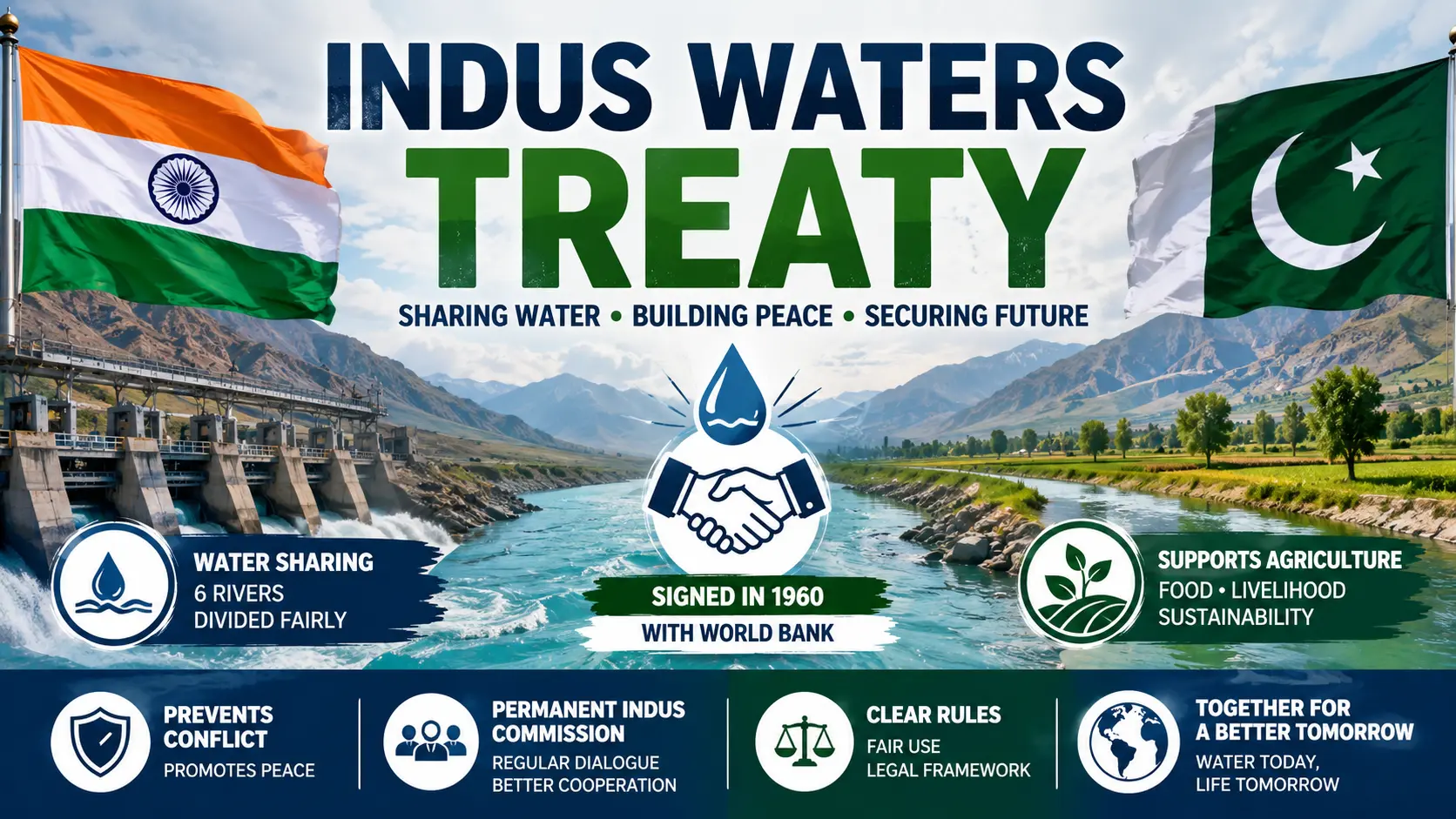
Indus Waters Treaty Explained in Simple Words 2026
Introduction
The Indus Waters Treaty is one of the most important water sharing agreements in the world. It was signed between Pakistan and India in 1960. This treaty helps both countries manage the water of the Indus River system peacefully. Even during times of tension, this agreement has continued to work, which makes it very unique.
In this article, you will learn what the Indus Waters Treaty is, why it was needed, how it works, and why it is still important today.
What is the Indus Waters Treaty
The Indus Waters Treaty is a water distribution agreement between Pakistan and India. It was signed on September 19, 1960, with the help of the World Bank.
The treaty divides the rivers of the Indus Basin between the two countries. It clearly explains which country can use which rivers.
Background of the Treaty
Why was the treaty needed
After the partition of British India in 1947, both Pakistan and India became separate countries. The Indus River system was divided between them, but the control of water sources became a big issue.
India controlled the upper parts of the rivers, while Pakistan depended heavily on these rivers for agriculture. This created tension because water is essential for farming and daily life.
Role of the World Bank
The World Bank helped both countries negotiate and reach an agreement. After many years of discussion, both sides agreed to sign the treaty in 1960.
Rivers Included in the Treaty
The Indus Waters Treaty divides six major rivers into two groups.
Eastern Rivers
These rivers were given to India
- Ravi
- Beas
- Sutlej
India has full control over these rivers.
Western Rivers
These rivers were given to Pakistan
- Indus
- Jhelum
- Chenab
Pakistan has primary rights over these rivers.
However, India is allowed limited use of the western rivers for non consumptive purposes such as hydroelectric power, irrigation, and storage within certain limits.
How the Treaty Works
Water Distribution System
The treaty clearly defines how water will be shared. Pakistan gets most of its water from the western rivers, while India uses the eastern rivers.
Engineering Projects
To make the system work, Pakistan built dams, canals, and reservoirs. These projects help store and distribute water efficiently.
Monitoring and Cooperation
Both countries have representatives who meet regularly to discuss water issues. This system is called the Permanent Indus Commission.
Importance of the Indus Waters Treaty
Supports Agriculture
Pakistan depends heavily on agriculture. The treaty ensures a stable supply of water for crops like wheat, rice, and cotton.
Prevents Conflict
Water disputes can lead to serious conflicts. This treaty helps avoid such problems by setting clear rules.
Long Lasting Agreement
The Indus Waters Treaty has survived wars and political tensions. It is often called one of the most successful water treaties in the world.
Challenges and Disputes
Hydropower Projects
India has built several hydroelectric projects on the western rivers. Pakistan sometimes raises concerns that these projects may reduce water flow.
Climate Change
Climate change is affecting river flows. Glaciers are melting and rainfall patterns are changing. This creates new challenges for both countries.
Population Growth
Both countries have growing populations. This increases the demand for water, making the treaty more important than ever.
Key Features of the Treaty
- Clear division of rivers between India and Pakistan
- Legal framework for water sharing
- Dispute resolution system
- Involvement of the World Bank
- Regular communication through the Permanent Indus Commission
Why the Treaty Still Matters Today
The Indus Waters Treaty remains very important because water is becoming more valuable every year. Both Pakistan and India rely on these rivers for their survival.
Despite political tensions, both countries continue to follow the treaty. This shows that cooperation is possible even in difficult situations.
Conclusion
The Indus Waters Treaty is a powerful example of how countries can work together to solve important problems. It has helped maintain peace and ensure water supply for millions of people.
Understanding this treaty is important because water is a basic need, and managing it wisely is necessary for the future.
Disclaimer
This article is for informational purposes only. It is written in simple language to help readers understand the Indus Waters Treaty and does not provide legal or official interpretation of the agreement.