PM Electric Rickshaw & Bike Scheme 2026 – Complete Guide
Introduction
In 2026, Shehbaz Sharif introduced a major initiative aimed at tackling two serious problems in Pakistan: unemployment and rising fuel costs. This program focuses on providing electric vehicles to deserving individuals, while also encouraging clean and sustainable transportation.
Instead of relying on traditional fuel-powered vehicles, this scheme promotes electric mobility—helping both the economy and the environment.
🔍 What is the Electric Vehicle Scheme?
This government-backed program is designed to distribute electric bikes, rickshaws, and loaders across the country.
The scheme works in two different ways:
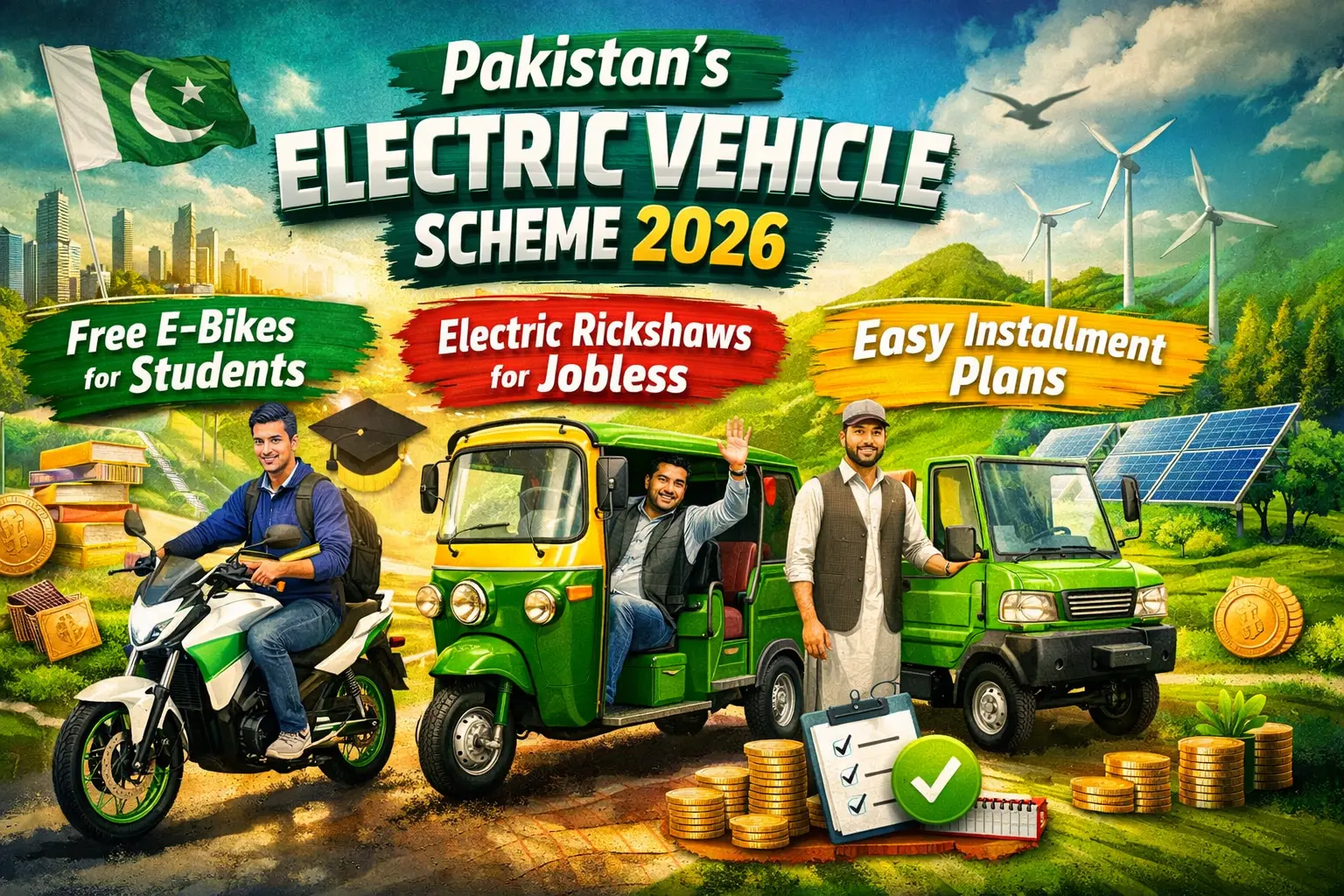
- Students who perform exceptionally well academically will receive free electric bikes.
- Unemployed individuals will be offered electric rickshaws and loaders on easy installment plans.
This approach ensures that both education and employment are supported at the same time.
🎯 Who Can Apply?
The scheme mainly focuses on two groups:
👨🔧 Unemployed Individuals
People without stable income can apply for electric rickshaws or loaders to start earning independently.
🎓 High-Achieving Students
Students who score top marks in intermediate exams will be rewarded with electric bikes.
⚖️ Special Allocation Policy
The government has also introduced quotas to keep the process fair:
- 25% share reserved for women
- 10% allocation for Balochistan residents
- Priority given to financially weak applicants
This ensures equal opportunity across gender and regions.
📋 Eligibility Criteria
For Jobless Applicants:
- Must hold a valid Pakistani CNIC
- Should not have a stable source of income
- Must be capable of running a vehicle for earning
- Low-income applicants will be preferred
For Students:
- Must achieve high marks in intermediate exams
- Educational documents must be verified
- Students from all boards can apply
- Preference for rural and underdeveloped areas
📝 Application Process
The government is expected to launch an online registration system soon. The process will be simple and accessible.
Required Documents:
- CNIC
- Academic results (for students)
- Proof of financial condition
- Passport-size photo
- Contact details
After submission, applications will go through verification before final selection.
⭐ Key Highlights of the Scheme
- Around 100,000 electric bikes for students
- Nearly 300,000 rickshaws and loaders for job seekers
- Vehicles will meet safety and quality standards
- Transparent distribution through third-party checks
- Support for local manufacturing industry
🌱 Purpose Behind the Initiative
This program is not just about giving vehicles—it’s a strategy to improve multiple areas:
📚 Education Support
Rewarding top-performing students motivates others to work harder.
💼 Employment Generation
Providing vehicles helps people earn independently without waiting for jobs.
🌍 Environmental Protection
Electric vehicles reduce pollution and cut fuel consumption.
📈 Economic Growth
Local production of EVs will create jobs and boost industry.
🏛️ Transparency & Monitoring
The government has emphasized strict monitoring of the scheme to avoid corruption.
Key steps include:
- Independent verification of applicants
- Quality checks on vehicles
- Fair distribution policies
- Public awareness campaigns
🌍 Economic & Environmental Impact
Switching to electric vehicles will reduce reliance on imported fuel, saving billions in foreign exchange.
Additionally, the government plans to build EV battery plants, which will:
- Create new job opportunities
- Strengthen local industry
- Support long-term sustainability
🧾 Conclusion
This electric vehicle initiative is a serious attempt to fix real problems—unemployment, pollution, and lack of opportunity.
If executed properly, it can:
- Help thousands of people earn a stable income
- Reward hardworking students
- Push Pakistan toward a cleaner future
But here’s the reality most people ignore: schemes like this only work if people actually apply correctly and follow through. If you miss deadlines or submit weak applications, you’re out—simple as that.