High Octane Fuel Price Hike 2026 – Complete Details and Impact
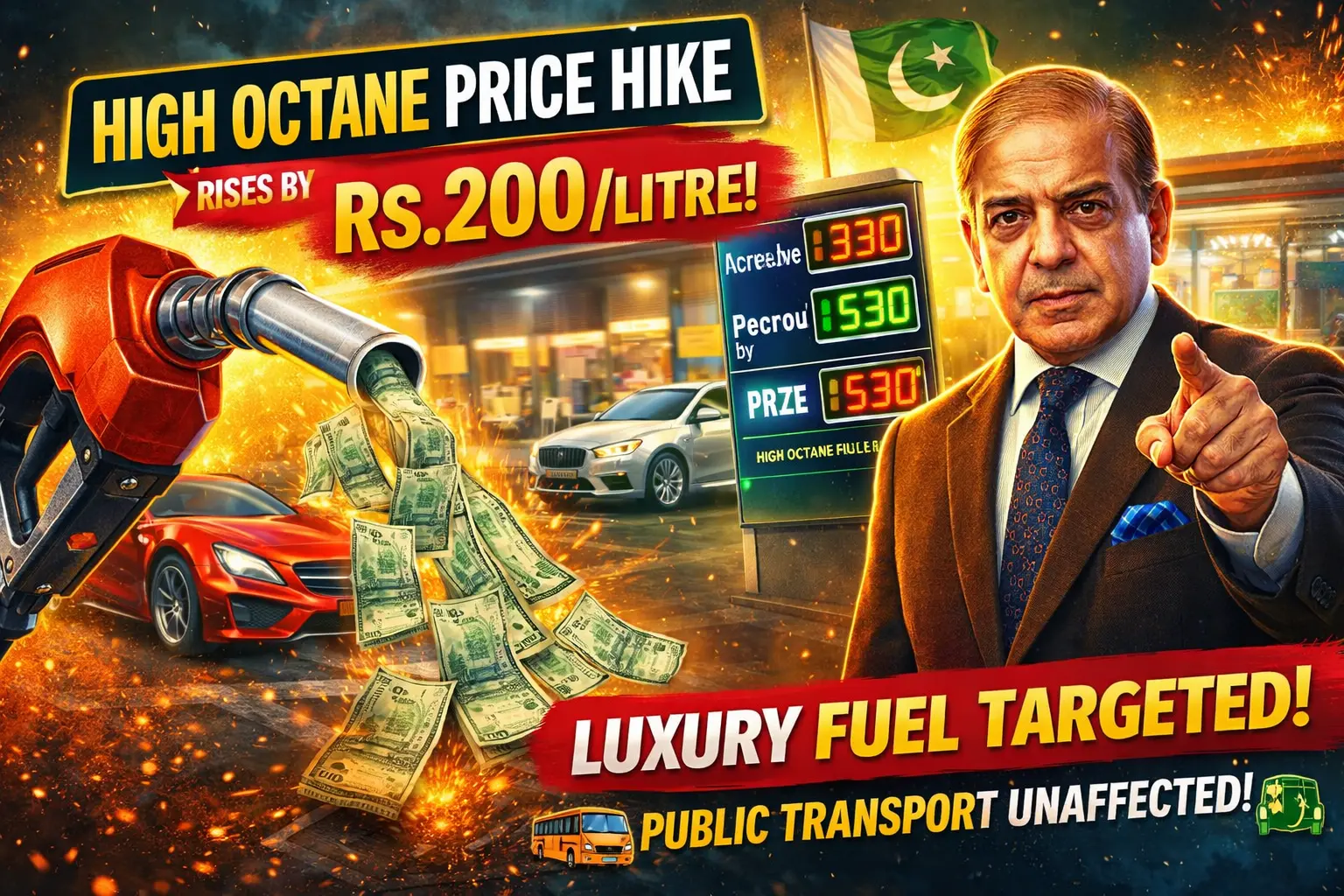
The Government of Pakistan has introduced a major change in fuel pricing by significantly increasing the cost of high-octane petrol. This decision has raised the price by Rs. 200 per litre, making it one of the most expensive fuel types in the country.
The move has been approved at the highest level and is being seen as a strategy to place financial responsibility on affluent consumers while keeping relief measures intact for the general public.
📈 Sharp Increase in High Octane Charges
Under the revised structure, the levy applied to high-octane petrol has been raised from Rs. 100 to Rs. 300 per litre. Due to this adjustment, the overall price has now exceeded Rs. 530 per litre.
Unlike regular petrol, the pricing of high-octane fuel is not fully controlled, meaning its rate may change depending on supply conditions and market trends.
🏛️ Decision Taken at Top Government Level
The policy was finalized during an important meeting led by Prime Minister Shehbaz Sharif. During discussions, it was highlighted that high-octane fuel is mostly used in luxury vehicles.
Based on this, the leadership decided that increasing its price would be a reasonable way to collect additional funds without burdening the majority of citizens.
💰 Expected Financial Benefits
Officials estimate that this increase will generate around Rs. 9 billion every month. This amount is expected to be used for initiatives aimed at supporting the public and stabilizing the economy.
The government believes that targeting luxury consumption can help improve financial balance and ensure better use of national resources.
👨👩👧 Relief for Common Citizens
A key aspect of this decision is that there is no change in the prices of commonly used fuels such as petrol and diesel. These fuels are widely used by middle- and lower-income groups.
By keeping their prices stable, the government aims to reduce the impact of inflation on everyday life.
🚍 No Effect on Transport Sector
Authorities have clarified that this price increase will not influence public transport fares or airline ticket costs.
Since high-octane fuel is not used in buses, rickshaws, or commercial transport, daily commuting expenses are expected to remain unchanged.
📊 Background of the Policy
This step comes after earlier instructions were given to review the pricing system of premium fuels. Relevant departments were asked to suggest improvements to make the system more balanced.
The latest update reflects those recommendations and shows a shift toward a more targeted taxation approach.
👥 Key Officials Involved
The meeting included several senior government members such as:
- Muhammad Aurangzeb
- Attaullah Tarar
- Ali Pervaiz Malik
Their involvement highlights the importance of this decision at the national level.
🗣️ Public and Expert Opinions
Reactions to this increase have been mixed. Some experts consider it a smart move that targets high-income individuals who can afford expensive fuel.
On the other hand, a few concerns have been raised regarding possible indirect effects on luxury markets and overall economic activity.
Even with different viewpoints, many believe the decision aims to create fairness in economic contributions.
📝 Final Thoughts
The rise in high-octane fuel prices marks a significant change in Pakistan’s fuel policy. By focusing on premium fuel users, the government is attempting to generate additional income without affecting essential fuel prices.
With expected monthly revenue gains and protection for the general public, the success of this policy will depend on how effectively it is implemented in the long run.